Glacier Point: Yosemite’s Panorama Trail

THE IDEA

I had never been to Yosemite before, so I wanted to make my first time worth something. I didn’t have to research for long before I found dozens of reviews calling Yosemite’s Panorama Trail one of the most scenic and must-see of the park. The 8.5 mile trail was marked “challenging” on most websites, so I could think of no word other than “grueling” to describe the round-trip version of this trip I had conjured on my own.

GETTING THERE – 1:45 a.m.

My alarm was set for 1:45 a.m., and I was out the door by 2:00. This was a late Friday night/Saturday morning for San Francisco, so I wasn’t surprised to see a number of drivers out around the city. Once passing through Oakland, though, it was smooth sailing. Around 4:00 I hit highway 120, which I knew would take me all the way to the West gates of the park, so I stopped for gas, coffee, and donuts. It probably only took me a little over an hour to reach the entrance of the park, making a grand total of 3 hours from my start in SF. However, and I’m glad I had called the park ranger in advance for this tip, I drove for 1.25 hours within Yosemite before reaching my destination, Glacier Point. As she reminded me the day before, it’s a big, big park.

I reached the Glacier Point parking lot at 6:15, and enjoyed the dawn on the steps of the large stone amphitheater carved into the side of the hill, overlooking Yosemite’s granite walls and Half Dome at the center of it. The sun started peeking over the hills at 6:30, and I soaked in the rays like a smile for a couple of minutes before beginning my journey.

First 10 minutes of day break, descending the Panorama Trail from Glacier Point

First 10 minutes of day break, descending the Panorama Trail from Glacier Point

SUNRISE START – 6:45

I opted to take the road less traveled for this trip. By beating the crowds with a sunrise start, I hiked for nearly 4.5 hours alone and uninterrupted. Since Glacier Point is around 25 miles and a couple thousand vertical feet outside of Yosemite Valley, it’s a much more popular afternoon destination for hikers than morning. So in this planning, I walked against the first crowds I encountered in the later morning coming up from the Valley, and again walked the opposite direction of hikers in the afternoon who were descending from Glacier Point. The direction and timing were perfect for a solo adventure, if not a completely delusional undertaking.

DESCENT

It’s counter-intuitive to begin a day hiking down the side of a mountain, rather than up it. In fact the early morning descending slope went against everything that my body was prepared for. That being said, it was a nice hike down, and a warm day even at 7:00 a.m.

Throughout the entire day, it was easy to stay on track. Each trail was clearly marked, and there were numerous intersections that allowed me to check my distance about every two miles. After the first 2.5 miles, I saw the large granite slabs that surround Illilouette Fall, and crossed a wooden footbridge to the only uphill section going this direction. Keeping my eyes peeled for the lookout spot I’d read so much about – and which makes this trail so unique – I soon saw the unmarked grey path in a little less than a mile. This path that veers to the left off of the main drag takes you to Panorama Point, which was hands-down the most beautiful view I saw all day.

Overlooking Panorama Point

Overlooking Panorama Point

I continued down the traditional Panorama hiking route, past Nevada Fall and Vernal Fall. The top of Nevada Fall offers another vantage point to look out across the park, and walking down the steep, crooked steps that parallel Vernal Fall gave me a cool break from the sun with its shadowed slopes and mist coming off from the waterfall. I read that these were two of the most impressive waterfalls in the park.

Now, note: The small stone steps that line Vernal Fall barely allow 2 bodies to pass through or past each other, so things get bottlenecked here pretty easily. But really, the only point that was inundated with crowds was once I reached the Valley floor, which was packed with people starting the hike up.

TURNAROUND – 10:30-10:50

The trail runs into road at the Happy Isles Trailhead, where I found a shuttle stop for the Valley’s free transportation. There was a snack stand that wasn’t open yet, so I began walking about a half mile to Curry Village hoping to find food. Alas, I did not, and sat on a boulder on the side of the road for a snack and a quick break before I started back up.

ASCENT

A mile past the Happy Isles Trailhead, the path splits left up the Mist Trail and right up the John Muir Trail. These are equidistant in length and meet back up in just about a mile, only difference is avoiding the slower hikers on the steep slopes of the Mist Trail. I did run into a couple of thru-hikers who were following the entire 221-mile John Muir Trail from Yosemite National Park to Mt. Whitney. They were pretty clean looking, so I had to imagine that they were following the traditional north-to-south route.

John Muir Trail to top of Nevada Fall

John Muir Trail to top of Nevada Fall

My time down and my time up were nearly identical, 4 hours either way. In the morning I had taken my time to venture off of the trail for the detours mentioned above (Panorama Point, Nevada Falls), and in the afternoon I had significantly slowed my pace and doubled my number of stops for rest and water. By the end of the day I had drunken almost all of the three liters I had brought with me.

END – 3:00

The last four miles of this trail were grueling, if not for the afternoon heat intensifying, but for the psychological torment of ending a day-long hike headed uphill, rather than down. But finally, over 19 miles and 6,100 elevation gain later, I made it to the top, much sweatier and more sunburnt than when I’d started.

QUICK STATS

  • 17 miles (with no detours) – 19.5 miles for me
  • Estimated 5,000 elevation gain
  • 8 hours

Mt. St. Helens Summit Climb

Photos from Mt. St. Helens, May 29, 2014 with Dad.

  • Length: 10 miles (give or take, we got lost)
  • Elevation gain: 5,500 ft.
  • Summit: 8,366 ft.
  • Time: 7:15 am – 6:30 pm
  • Total time: 11.5 hours

dscn0921

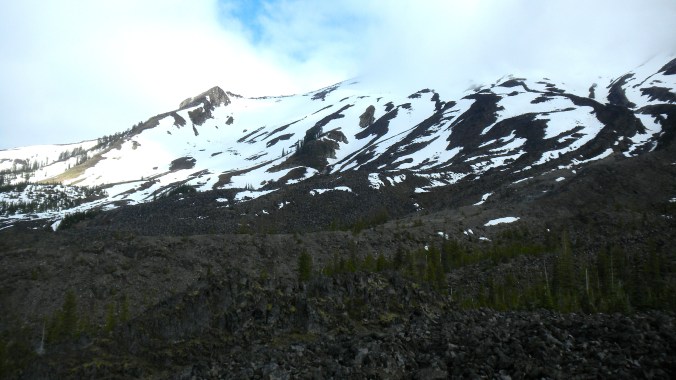
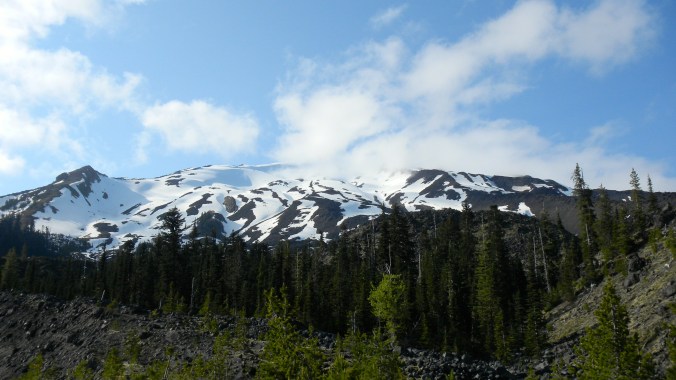
First look at the mountain, coming up out of the tree line.

dscn0926

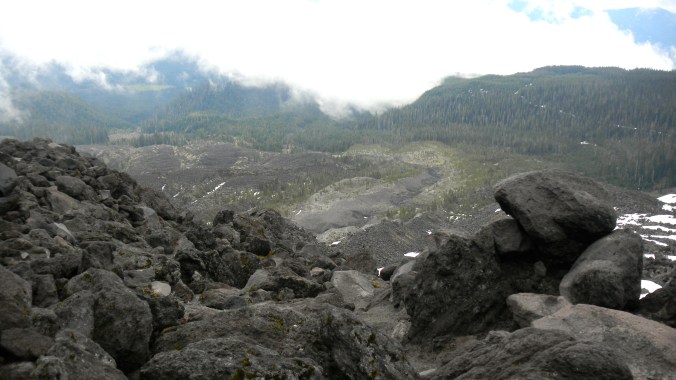
Majority of this route consists of lava rocks from the 1980 explosion. Lots of fun climbing up over and traversing these to find the trail.

dscn0924

dscn0925

dscn0927

Conditions so foggy, I could barely see 10 feet in front of me.

dscn0932

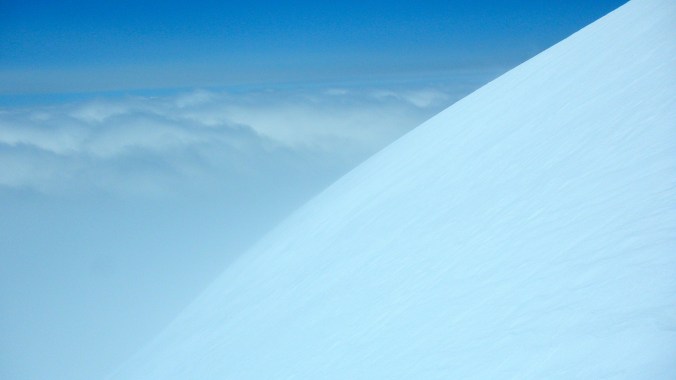
Breathtakingly steep grades became more visible when we breached the clouds.

dscn0938

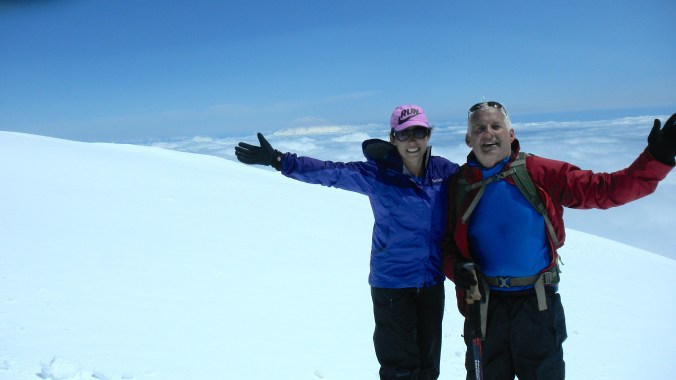
Met some fellow climbers on the summit.

dscn0944

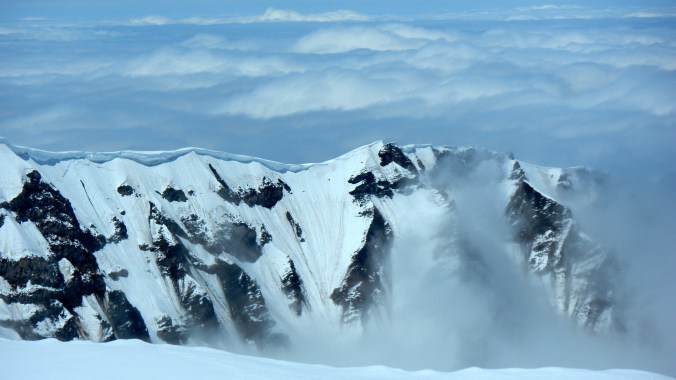
Close-up of the west-side of the crater of the mountain’s surrounding rim.

dscn0945

Neighboring Mt. Adams visible above the clouds to the east.

dscn0948

Summit smiles!

dscn0949

Peeking over the summit into the crater that was blown from the 1980 explosion.

dscn0959

Got a little lost on our traverse back to the trailhead…

dscn0961

Cone Peak: Hiking the “Sea to Sky”

Cone Peak has been called the most spectacular mountain on the Big Sur coast of California, and rightfully so. It stands as the tallest coastal mountain in the contiguous lower 48 states, with the peak itself is a little less than 3 miles from the coast as the crow flies, but hikers will wind up 11 miles of trail to reach its summit- a demanding 22 miles round-trip. Daunting as that may sound, the changing landscapes made it all worth the while from the grassy coastal hills to the damp redwood forests, up through dry red stretches of dirt and onto the final white rocky ascent.

Beginning right off of Highway 1 at about 100 vertical feet, it’s earned its title the “Sea-to-Sky” trail for the challenging journey up nearly one vertical mile. The Vicente Flat Trail begins on the land side of Highway 1, marked by a small sign, adjacent to a larger one welcoming visitors to “Los Padres National Forest.” There’s decent parking at the trailhead for about 15 cars, which is also directly across the road from Kirk Creek Campground- a site that sits right on the edge of the Pacific Ocean, its users perched on top of bluffs an easy walking distance to the water.

Cone_Peak_Hike_1

View of Pacific Ocean from Kirk Creek Campground


I had planned to stay at this campground since it was hands-down the most convenient spot for getting an early start, but didn’t realize I had chosen this climb on the same weekend as the Big Sur marathon. The campground takes reservations between 6 months and 8 days in advance, and the rest of the spots are first-come, first-serve. I pulled in at around 6:45pm, feeling shattered when I saw the sign “Campground Full.” I circled the lot and pulled over to ask an older gentleman if there were any other places to camp, and he responded by telling me that him and his wife just had their friend cancel on them, and I could take his spot if I’d liked. So I spent the evening with John and Judy, trading part of my 32 oz. Sierra Nevada for some homemade, stove-cooked chili, before they went to sleep in their tent and I in my car.

My alarm was set for 5:30 a.m., and it felt warmer than I expected- maybe 50 degrees out. I was on foot on the trail at 6:05 a.m. when it was plenty light out to see the stunning views of the Pacific as I followed the trail upwards. The Vicente Flat trail inches north along grassy hills, giving climbers a fresh breeze (stronger wind in the afternoon), and powerful sound of the ocean for the first hour of the climb.

Cone_Peak_Hike_2

Pacific Ocean after hiking 1 hr / 500 vertical ft.


I wore leggings, thick socks, hiking boots, a long sleeved wicking shirt, a fleece, and a hat for the sun that came blazing later in the day. I packed a rainproof windbreaker and a down jacket just in case, though I didn’t end up needing either. Throughout the course of the day I ate a banana, apple, two granola bars, yogurt-covered pretzels as a nice treat at the top, and my favorite Cliff Blok chews for extra energy. I carried three and a half liters of water and ended up drinking nearly three by the time I had hit the road. I also packed SPF lip balm, ibuprofen for my knees on the way down, sunglasses, extra hair ties, gators and an extra pair of socks that I didn’t end up using. My ski poles saved me- both on the challenging ascent and for bracing myself downhill, the last couple miles being especially painful as my boots wore the skin of my feet thin (and completely off of my heels), precisely the reason I carry an extra pair of flip-flops in my car.

The first 5 miles to the back country campgrounds of Vicente Flat are easy going at 1620 feet. Continue past the campground for 2.5 miles up the steepest stretch that reaches Cone Peak Road at 3600 feet. Coming out of the forest and up onto the service road gives hikers a breath of fresh air- and a brand new view to enjoy. The road sits between the Pacific to your west and the rest of the Los Padres National Forest to your east, a whole new landscape to take in.

Cone_Peak_hike_3

Los Padres hills


I saw a couple cars on this road and a few runners who use it as a loop- it provides an alternate way down. Leaving from the Vicente Flat trail, you’ll turn left and walk along this service road for about 1.5 miles until you reach the Cone Peak trailhead on your left, marked clearly so you won’t miss it. The final 3 miles up can get chillier and may be cloud-covered. I walked through some fog and was worried it would affect my visibility , but once I got to the top I saw the promised views that stretched from the Pacific ocean, to the windy Highway 1 along the coast, and back east towards the rest of the San Lucia mountain range.

Cone_Peak_Hike_4

More Pacific views from Vicente Flat trail


I got to the summit at 10:35 a.m., staying 10 minutes and beginning my descent at 10:45. The summit itself is rocky with what looks like an abandoned ranger station, and trees were lined with snow from weather the night before. While I had seen a couple backpackers at their camp on my way up, it wasn’t until around noon that I ran into my first hikers headed up to the top. I felt lucky- by that time the fog that skirted the mountain expanded into a large cloud and gave no sign of wavering.

Cone_Peak_Hike_5

Looking back up at Cone Peak following descent


The sun got warmer in the early afternoon, but just as much as the wind picked up, so I stayed in my fleece all day long. I passed dozens of people the closer I got to Highway 1, many walking just up to the Vicente Flat campsite, some only walking a mile or two up the trail to relax on one of the many bluffs overlooking the ocean. I took just as much time on the way down as I did on the ascent; arriving back at my car at 3:15pm. Quick stop at John and Judy’s campsite to thank them again for their kindness with a bag of leftover trail mix, and I took off for the 3.5 hour long drive north to the Bay Area.