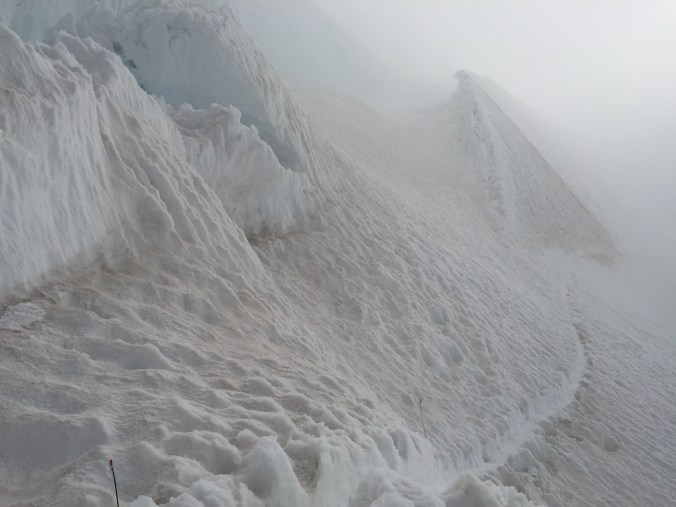
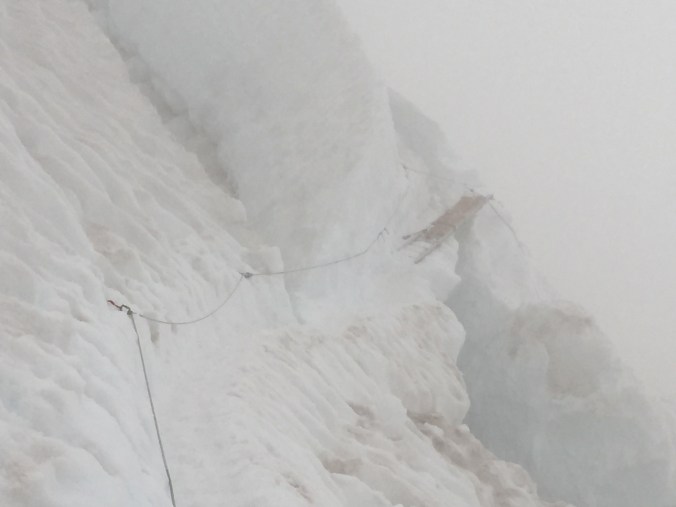
10 Things You Need To Do Before Your Long-Term Adventure Abroad

As seen on The Outbound Collective.

Prepare for the trip of a lifetime.

You’re going away on a long-term, far-away adventure, and you couldn’t be more excited! But before you pack your bikini and hiking boots, you have some business to take care of. Don’t blow off this list of must-dos before you leave the country. You’ll be happy you didn’t.

img_0355_2

1) Splurge on the right gear

You’ve been saving up to be able to afford your overseas adventure for a very long time, but now is not the time to skimp on big purchases that matter. Make sure you have a durable backpack or duffel bag that will stand up to daily travel damages. Pick out a comfortable, sturdy, and long-lasting pair of walking shoes. Do some research on the climates that you’ll be visiting – do you need an industrial strength Himalayan parka, or will your tried-and-true down jacket suffice?

2) Stock up on USA-made medications

It’s not fun trying to read international medical labels. Language gap? Metric system confusion? If you pack your bag with over-the-counter brands you’re familiar with back home, you’ll save yourself a lot of time and sweat. In this case it’s better to be a little overly cautious than sorry.

Don’t forget to pack:

  • Cold & flu pills
  • Indigestion pills (liquids are a no-no, grab the capsule version of Pepto Bismol)
  • Cough drops
  • Diuretic and anti-diarrhea pills

3) Visit your doctor and dentist

Even if you feel happy and healthy as can be, give yourself peace of mind by taking advantage of a familiar hospital environment. Get a physical, standard lab tests, and a good teeth cleaning to ensure everything’s working as it should before you embark on your journey.

sbvf2743

4) Go old school

Print out your itineraries, extra copies of your passport, and start collecting maps of your destination. Yes, that’s what I said – real, foldable maps that fit in a slim pocket. These paper documents may be the only reliable thing you end up packing. Sorry Google Maps, we’re letting the trees take care of this one.

5) Let your bank and credit card companies know you’re traveling

This should be one of the first things on your list. You certainly won’t get far if your bank shuts down your cards the second you try to purchase a candy bar at the Istanbul airport. Even if you don’t have an itinerary set in stone, a simple phone call to customer service will save you a world of trouble and confusion before you’re trapped cashless in a foreign country.

6) File your tax returns

Yes, we all normally wait until the last minute to get around to Tax Day… but if you’re going to be on the move and away from stable internet for an extended period of time, it’s just not worth it to procrastinate. Get it taken care of, and enjoy your bragging rights when your friends start to stress months after you’ve got it off your back.

img_3268

7) Apply for a credit card with excellent travel rewards

A lot of us are pretty clueless when it comes to making smart purchases using credit. The truth is, when you’re using your debit account on these huge expenses like flights, train travel, accommodations, and more, you’re basically throwing away money you could be earning on your next trip. Find a credit card that makes sense for you, and start tallying up those points!

8) Decide what you want to do with your phone

How attached are you to communicating with friends and family while you’re on the road? Choosing an international phone plan can be costly and unreliable, but it may be worth the expense for the comfort of having home right at your fingertips. On the other hand, if you’re out exploring the world, why would you want to be tied back to the place you just left? The choice is yours – but you’ll want to make it sooner rather than later.

9) Get organized

When you’re living out of a backpack or suitcase for months on end, you learn a little bit about necessity. Make a pile of all of the things you want to take, and cut it in half. Focus on the items you have to take, bring only what you can’t live without. Pack your clothes efficiently, have your camera accessible, and bury your important items like your passport somewhere safe.

10) Learn, explore, and grow

Pick up a book with key phrases of the local language you’ll be visiting. Pack a camera you trust to capture the beauty of all the new sights and places you’ll see. Leave your bag a little less than full, so you’ll have room to collect trinkets you can share with friends and family back home. Above all, prepare to be surprised by how much you discover while on your adventure.

img_4219

7 Tips For Balancing Work, Life, and Getting Outside

As seen on The Outbound Collective.

Never come down with another case of the Mondays.

There’s this great romantic divide between being a worker bee at a booming tech company and being an avid outdoor adventurer. Your work life and weekend life complement and contrast each other. There are commonalities between both and there are many, many differences.

It’s a fun challenge to maximize the 2/7 days of the week you get to spend away from your desk. Here are a few ideas to help.

1) Don’t let your weekends feel like work. Leave the stress at the office.

There’s nothing worse than beginning an outdoor getaway by shouldering a heavy backpack with the added weight of guilt, worrying, or stress leftover from a weekday dilemma. No matter how serious the issue seems between 9 to 5, a weekend adventure should give you the opportunity to momentarily lapse in these responsibilities and enjoy your time outside.

2) Unplug

We’re wired in all day – on standby to respond to emails, messages, phone calls, and more at the tap or swipe of a finger. So when you get the chance to disconnect from all of the buzzes, ringtones, and notifications that absorb your working life; take that chance.

Distraction-free adventures begin with a simple selection of the “Airplane Mode” function on your smartphone. You’ll still be able to capture the moment with your camera, without letting a text interrupt the perfect sunset shot. Plus, you’ll be conserving the battery life on your phone for up to a couple of days, which could be the extra safety measure that gets you back to your work desk in one piece.

3) Keep good company

Find a group of like-minded folks who are also driven to spend their weekends outdoors. It’s easier to look forward to a weekend full of faces you won’t see every day during the week. Plus, more people means more gear, trail stories, and camp food to share.

For the lone explorer, make your weekend time your “me time.” You spend every other moment during the week fostering connections and creating new ones – use your weekend as a chance to wander alone on a solo outdoor adventure.

4) Do something that scares you

You challenge yourself at work, you’re a go-getter, and your boss knows that you kicked ass on that last quarter-end project. But one thing you don’t get to do behind a desk every day is climb on the side of a cliff or scale a mountain. Let yourself get a little breathless on your weekends, add an edge to the Sunday scaries.

Whether it’s something that truly scares you, or just an activity that momentarily jars you from your everyday mundane, it’s good to do something that makes you feel alive and vulnerable once in awhile.

5) Never stop looking for new hobbies

Just like in your job, you’ll get bored if you’re performing the same task or visiting the same park weekend after weekend. Maybe you’re comfortable with the trails you know or pitches you’ve scaled, but without moving forward you won’t make any progress.

Discover new biking, running, and hiking trails by entering your city name at AllTrails or EveryTrail. Learn every detail about what it takes to summit the mountain on your horizon with SummitPost. Or, explore all kinds of new activities with The Outbound’s first-class search tool. Find something to get your imagination running during the workweek and be ready to push your limits by Saturday.

6) Help your office be eco-friendly

It will be all the more easier to return to your desk Monday morning when you’re working for a company that does good. Ask your team about their Social Corporate Responsibility principles, see where in your office you could improve recycling or electricity preservation. Work for a company that inspires greatness in their employees, and feel better about your work.

7) Find a flexible job that suits your lifestyle

This is the most important part of balancing your life outside of work and your career; with a job that makes sense for you. Find a field job that lets you take on flexible hours. Work at the crack of dawn so your afternoons become yours, or try to pack in your weekly hours into a couple of days to snowball your weekends.

When it comes down to it, money pays the bills, buys the gear, and funds the adventure. So find a job that suits you and what’s important for you, so you can keep exploring.

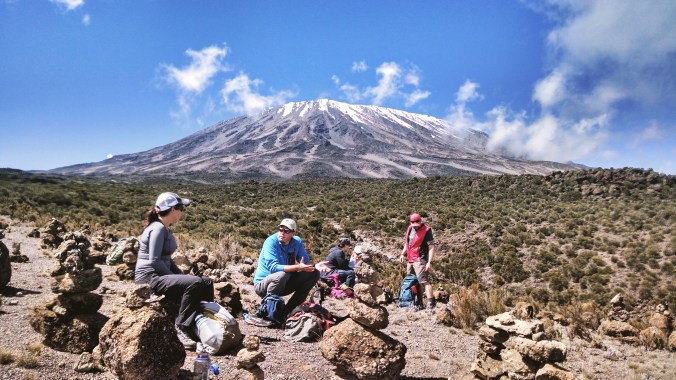
Summitting Mt. Kilimanjaro (19,341′) via the Rongai Route

Reach the Roof of Africa, Mt. Kilimanjaro (19,341’), on this high-altitude Tanzanian adventure, on the easiest non-technical climb of the world’s Seven Summits. Expect to spend 6-7 days hiking on the Rongai route.

Overview: 6 days, 43.8 miles, 12,945 ft. elevation gain

img_2658

Kilimanjaro is the highest free-standing mountain in the world since it stands alone from any mountain range, making its size and height all the more impressive. Because of its reputation, ease of accessibility, and Tanzania’s affordability, this is an incredibly popular mountain to climb and therefore laden with lots of red tape. It is required to organize this climb through a licensed mountain operator, as well as follow one of the official climbing routes – so be sure to do your due diligence and research the right route for you!

The Rongai Route is one of the least traveled ways up Africa’s tallest peak, allowing a more remote hiking experience. Unlike the southern routes, Rongai is a moorland or high-altitude desert climate, with far less precipitation than rainforest routes. The Rongai route meets the Marangu route on the final night to follow this trail to the summit.

Most, if not all, of the routes up the mountain begin in the town of Arusha, Tanzania, accessed by the Kilimanjaro International Airport (JRO). For this particular itinerary, you’ll head to the northeastern side of the mountain along the border of Kenya, about a five hour drive from Arusha. Expect to spend 6-7 days hiking on the Rongai route.

img_2717

Day 1: Nale Moru (1,950 m/6,400 ft.) + Simba Camp (2,650 m/8,700 ft.)

  • Walking distance: 6.5km/4 miles
  • Elevation gain: 700m/2,300 ft.

Today is the start of it all, beginning at the Rongai Gate in Nale Moru. After registering with park officials and finalizing the last of your packing, your hike starts through fields and a few small villages. You’ll spend the night at Simba Camp, close to the First Cave, overlooking the Kenyan plains.

Day 2: Kikelewa Caves (3,600 m/11,810 ft.)

  • Walking distance: 9 km/5.6 miles
  • Elevation gain: 950m/3,110 ft.

On the second day, vegetation grows thinner and you’ll enter into a truly high-alpine desert biosphere. Pass by the Second Cave (where you might stop for lunch) and end your day at Kikelewa Camp, next to the Kikelewa Cave.

img_2707

Day 3: Mawenzi Tarn (4,330m/14,210 ft.)

  • Walking distance: 6km/3.7 miles
  • Elevation gain: 730m/2,400 ft.

As the week progresses, your days grow shorter, and this hike to Mawenzi Tarn should only take a couple hours as your body adjusts to the higher elevations. This is when proper hydration and a slow pace (pole, pole, as the Tanzanians would say) play a huge part in your successful acclimatization. You’ll spend this night at Mawenzi Tarn and have plenty of time in the afternoon to explore the plains and rocky outcrops in this vast area.

Day 4: Kibo Huts (4,330 m/15,420 ft.)

  • Walking distance: 9km/5.6 miles
  • Elevation gain: 370m/1,215 ft.

This is the point where the Rongai Route meets up with the Marangu Route for your final summit push. You’ll want to leave Mawenzi Tarn early this morning so that you have plenty of time to rest and prepare for your summit bid later in the night. The Kibo Huts are a little like a semi-permanent village, with huge crowds from both routes and plenty of noise and excitement.

img_2677

Dancing at the summit of Uhuru Peak, Kilimanjaro.

Day 5: Summit via Gilman’s Point to Uhuru Peak (5,895m/19,340 ft.) to Horombo Huts (3,700m/12,200 ft.)

  • Walking distance: 5km/3.1 miles ascent + 15km/9.3 miles descent
  • Elevation gain: 1,195m/3,920 ft.
  • Elevation loss: 2,195m/7,200 ft.

Day 5 begins late night of Day 4, waking, eating, and heading out of camp by midnight for your summit bid. The first half of your early-morning leading up to Gilman’s Point (5,700m/18,700 ft.) will be full of undulating switchbacks that may be made more brutal by biting cold and harsh winds, as we were. From Gilman’s Point you’ll get to look into the huge volcanic crater and surrounding ice caps, with the true summit just ahead. The crater rim to your left leads you all the way to Uhuru Peak with the famous summit sign of Kilimanjaro.

Unfortunately this last push is where hikers are most likely to feel the full affects of altitude sickness, and we saw lots of folks being ushered or even carried down the mountain at this point. That’s why it’s all the more important to limit your time at the top and descend quickly, back to the Kibo Huts for some fuel and a short break, before you’ll continue on to the Horombo Huts.

Day 6: Marangu Gate (1,860m/6,102 ft.)

  • Walking distance: 20km/12.5 miles
  • Elevation loss: 1,840m/6,040 ft.

After all of the climbing you’ve accomplished, this hike out should feel like a piece of cake. Descending on the southside, you’ll be immersed in a beautiful rainforest as well as the infamous crowds you avoided to the north heading up for their chance at the summit. Take your time, enjoy the scenery, and give yourself a huge high-five once you’ve reached the final Marangu Gate.

img_2709-version-2

The final crater rim walk up to Uhuru Peak from Gilman’s Point.

While this climb is truly non-technical and often described as “easy” or a simple “walk-up,” proper planning and packing is essential to any climber’s success. Freak weather storms, freezing temperatures, and debilitating altitude sickness can occur at any time without warning. Pack for everything, and be prepared for anything.

Packing List

  • Wool hat + sun hat
  • Sunglasses
  • Sunscreen, +SPF chapstick
  • Heavyweight gloves
  • 3+ upper body layers – shirts, fleece, long underwear
  • Hardshell rain jacket
  • Down jacket
  • 2+ lower body layers – trekking pants, long underwear
  • Hardshell waterproof pants
  • Gaiters
  • 6+ pairs wool socks
  • Sturdy hiking boots
  • Trekking poles
  • Headlamp + extra batteries
  • 40+ liter backpack
  • Sleeping bag + sleeping pad
  • 2+ liter water bottles
  • Iodine or other water treatment
  • First aid kit
  • Deck of cards, journal, or charming humor for afternoons spent acclimatizing at camp

5 Things I Learned Trail Running The Grand Canyon Rim-to-Rim-to-Rim

As seen on The Outbound Collective.

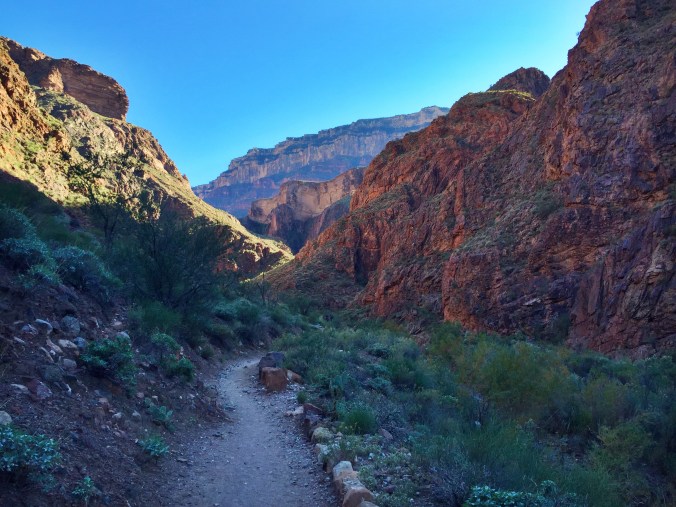
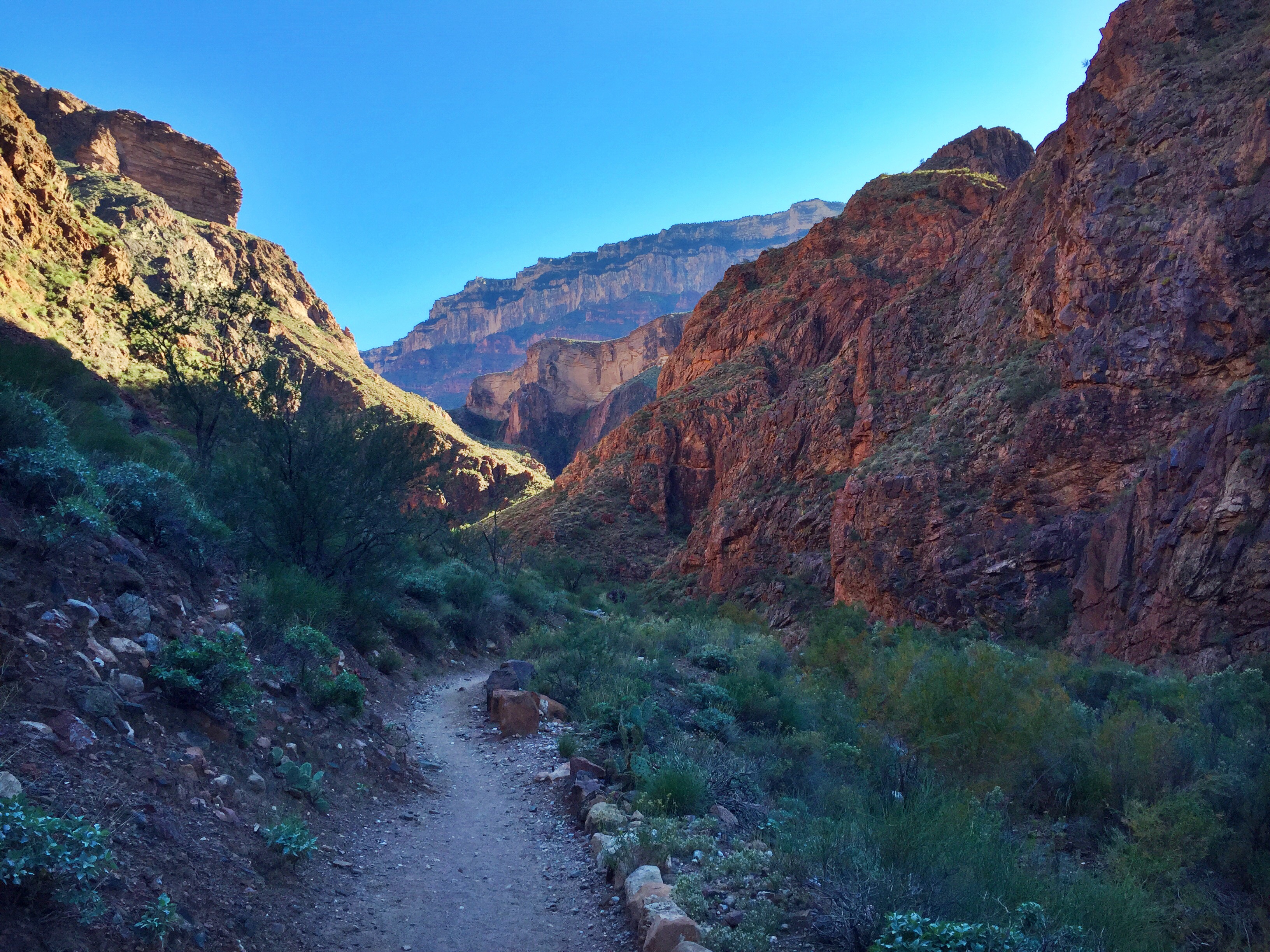
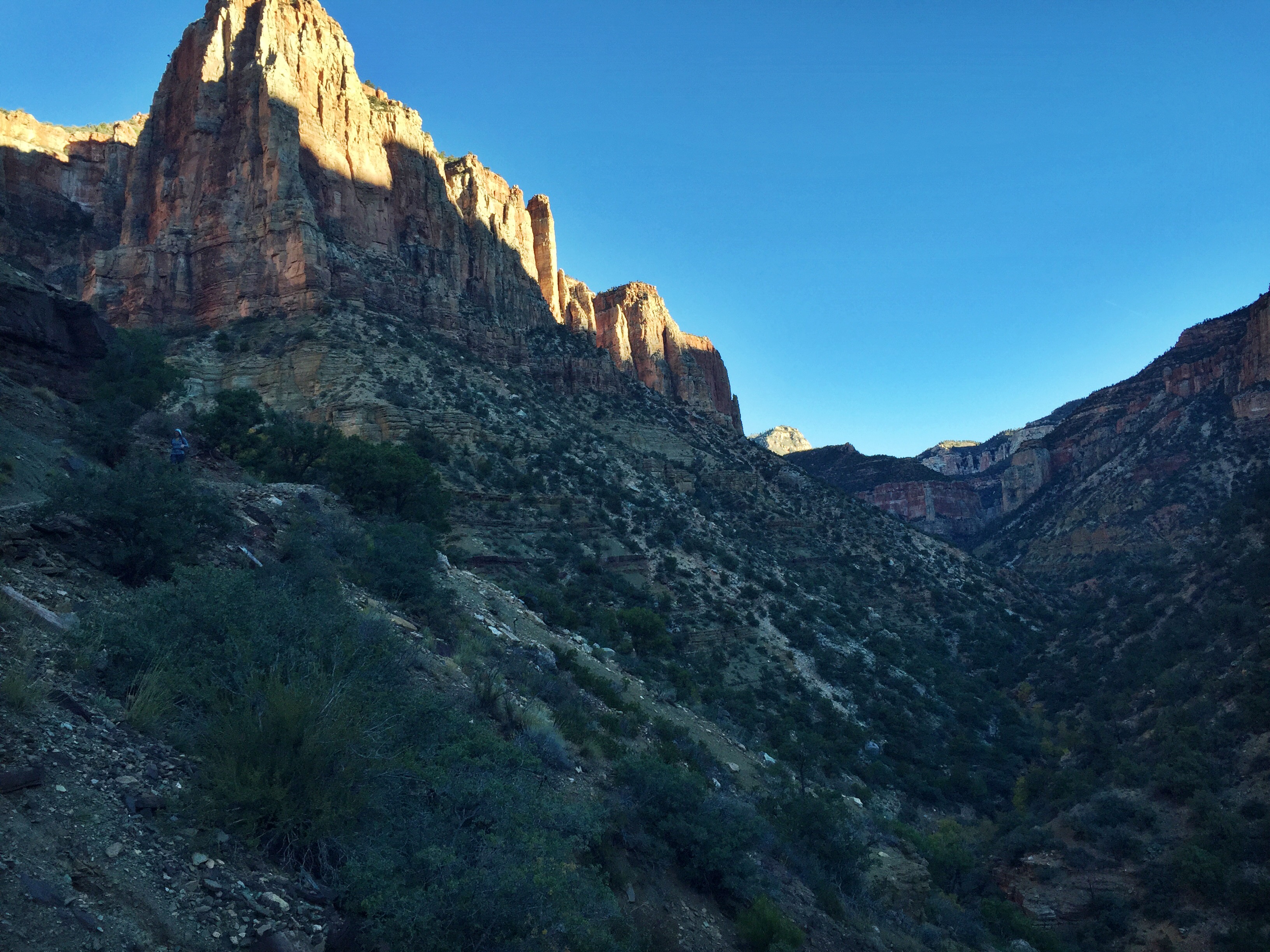
The Rim 2 Rim 2 Rim, or the R3, is a double-crossing of the Grand Canyon in a single setting. Endurance hikers, ultra-runners, and athletes of all ages and skill levels attempt this feat year-round. The undertaking involves over 40 miles and 11,000 vertical feet of steep and rocky terrain with unmatched scenery for one very long, very challenging day… and I was somehow talked into trying it out.

The Grand Canyon rightfully earns its place as one of the Seven Wonders of the Natural World, and as one of the most iconic parks in the U.S. This trip would be the first time I’d ever seen the canyon in person, and amusingly enough, I wouldn’t actually see it until three hours into our run when the sun began to rise. But those first few minutes when light began to trickle into the canyon were every bit as breathtaking as any postcard or calendar I’ve ever seen.

The Grand Canyon awed me, inspired me, and it taught me a few very important lessons about enjoying an outdoor adventure to its prime potential.

1) It’s so, so important to do your research

I had the pleasure of hiking with a park ranger on my ascent up the South Rim who let me use her as a pacer on my sluggish final miles. We both had a never-ending list of questions for each other about our contrasting perspectives on the R3, but the biggest one that stood out to me was: How much research did you do?

Turns out, I was more prepared than the majority of hikers and runners she’d seen. People neglected to check the park’s website for pipeline closures, track the weather to avoid extreme temperatures, or bring insufficient gear. This trouble ranged from finding themselves thirsty for miles, or with an ailment that seriously affected their chances of returning to safety.

Really, there’s no excuse not to over-plan and over-prepare for this type of trip, especially with the abundance of easily accessible information you can find about the Grand Canyon.

Grand Canyon R2R2R

2) You can find community anywhere

Community doesn’t just exist in the wild, it especially exists in the wild. Online, there were endless resources from small bloggers, to discussion boards, to organized groups dedicated to the promotion of the Rim to Rim to Rim. Canyon veterans and newbies ask and answer questions and share news, encouraging and allowing each other to plan the perfect GC trip.

The best part? This community doesn’t end online. When I was on the trail I met more runners, hikers, and backpackers that shared so much more knowledge than I ever could have Googled. I felt instantly bonded with the people around me, even without exchanging words. When you’re sharing a rock with a stranger, squeezing your mud-drenched feet into your trail runners after wading through a knee-deep trail flood, you’re establishing a connection that needs no explanation or expression.

3) Heed advice selectively

I didn’t have to ask friends and family for advice when I told them I was attempting the R3. They felt obligated to give it anyways. I received countless opinions from folks I trusted, but who didn’t have a clue what they were talking about.  From my first days of planning for the R3, my head was filled with horror stories of twisted ankles, rattlesnakes, water shortages, and personal failure.

That’s where this community became so important to my physical and mental preparation. Listening to advice from runners who had done double, triple, and quadruple crossing of the Grand Canyon made me feel exponentially better about my own ability.  Though, this confidence probably took longer to develop than it should have.

4) Self-doubt will eat you alive

I was stressed out to no end during the weeks leading up to this trip. I had never completed a marathon, and here I was about to do double that. Combined with the anxious counsel I received from friends, self-doubt constantly weighed on me and made the planning process leading up to the Grand Canyon to be strenuous and exhausting.

This number I had built up in my head – 46 miles – seemed increasingly larger, until I broke it down. Getting over my fears and allowing myself some credit was the first step to having the time of my life on the trail.

5) It’s not as hard as it seems

Like doubting ourselves, humans have an innate sense to overexaggerate obstacles and underestimate their own personal abilities. I found myself doing just that, until I discovered that the Grand Canyon trails were equivalent to the mountains I was used to hiking – only inverted.

By comparing the canyon to what I was familiar with, moving at a pace I knew I could maintain, and keeping a large reserve of strength and energy for the final push back up the south Rim, I found the feat totally manageable. With the right gear, physical training, and nutrition preparation, it truly was a cinch.

I walked away from this experience blister-free and knowledge-full thanks to the people and resources I found along the way. Maybe next year I’ll be able to pass on some of this newfound knowledge when I return for a second shot.

Rim to Rim to Rim: Running Across the Grand Canyon

Known as the Rim 2 Rim 2 Rim, or the Rim3, crossing the Grand Canyon back and forth in the course of a day is an ultra-marathon feat attempted by hikers, runners, and athletes of all ages and activity level. My friend Nina had completed the entire run the last two years in a row and was back with a vendetta to beat her previous time of 15 hours. She talked me into joining her, and after reluctantly buying a plane ticket, and then ambitiously taking on this double-marathon day, I owe her an entire world of thanks for pushing and inspiring me beyond my limits.

Grand Canyon R2R2R

The general rule of thumb: Run downhill, walk when necessary, and hike uphill. I followed this rule pretty steadily, running or jogging where I could, and walking when I felt like it. I’m surprising myself as I type this, but I truly found this endeavor to be much more reasonable than I’d thought it would be a week before. I stressed myself out and built up this number in my head – 46 miles – asking myself over and over what was I thinking.

The truth is, the Grand Canyon is essentially an inverted mountain. So by comparing it to what I was familiar with (mountain climbing), moving at a pace I knew I could maintain, and keeping a large reserve of strength and energy for the final push back up the South Rim, I found the feat totally manageable. With the right gear, physical training, and nutrition preparation, it was a cinch. And honestly, more than half of it was mental: overcoming my own self-doubt.

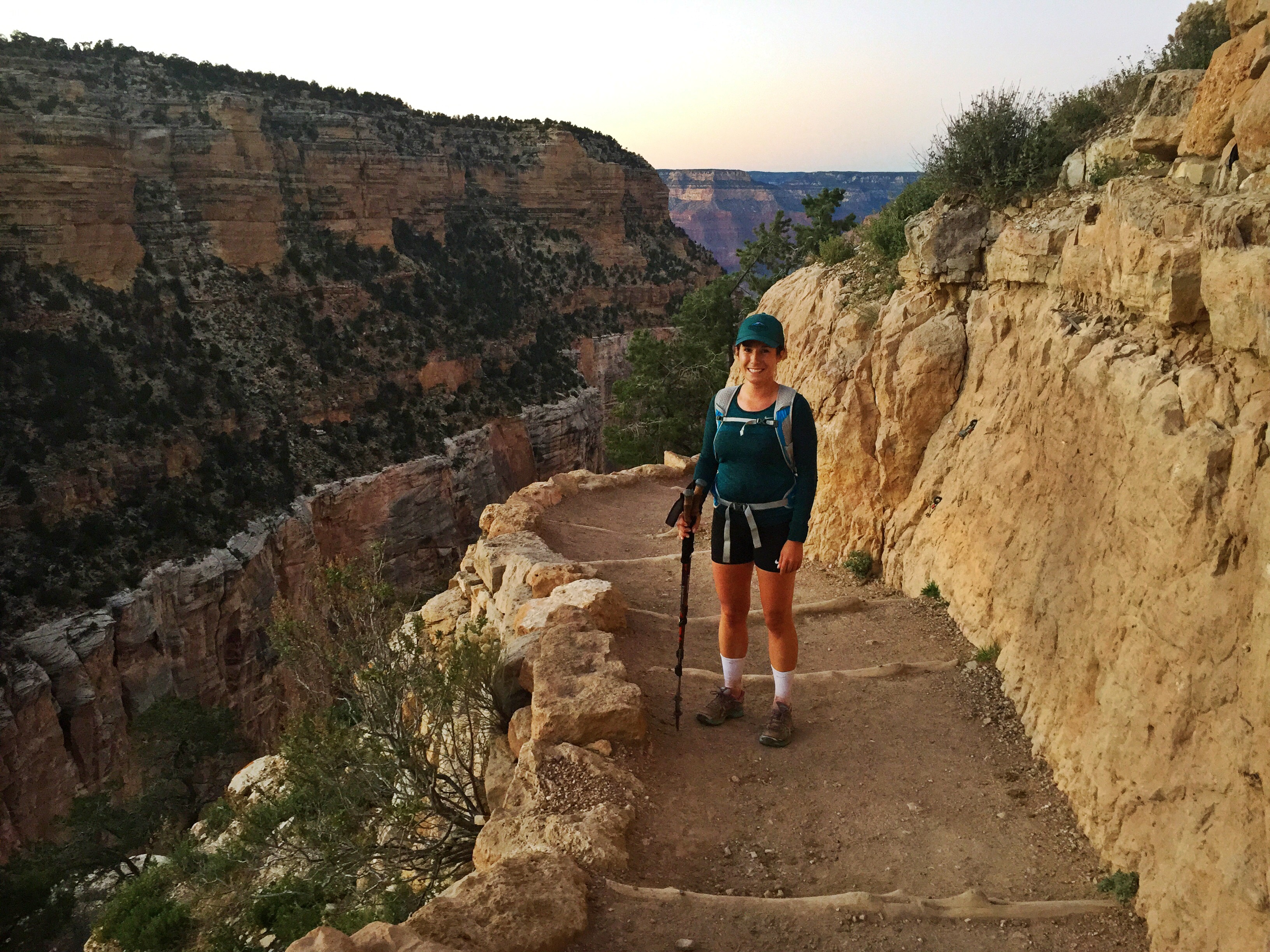
We started the day with a 2:00am alarm, wolfing down pop-tarts and coffee until our taxi arrived. It was a short ride to the South Kaibab Trail, which is the shorter and steeper route down the South Rim. We would return up the Bright Angel Trail, a longer and more gradual ascent up the South Rim that would land us right near the doorstep of our hotel.

We started running at 2:50am. We wouldn’t see sunlight for nearly four hours.
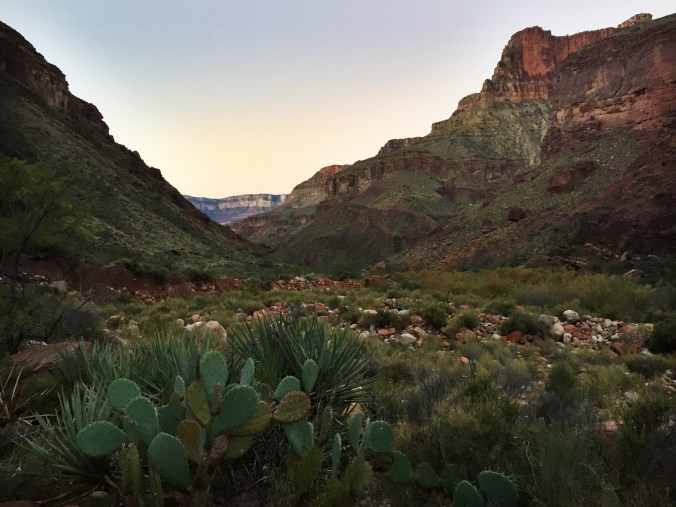
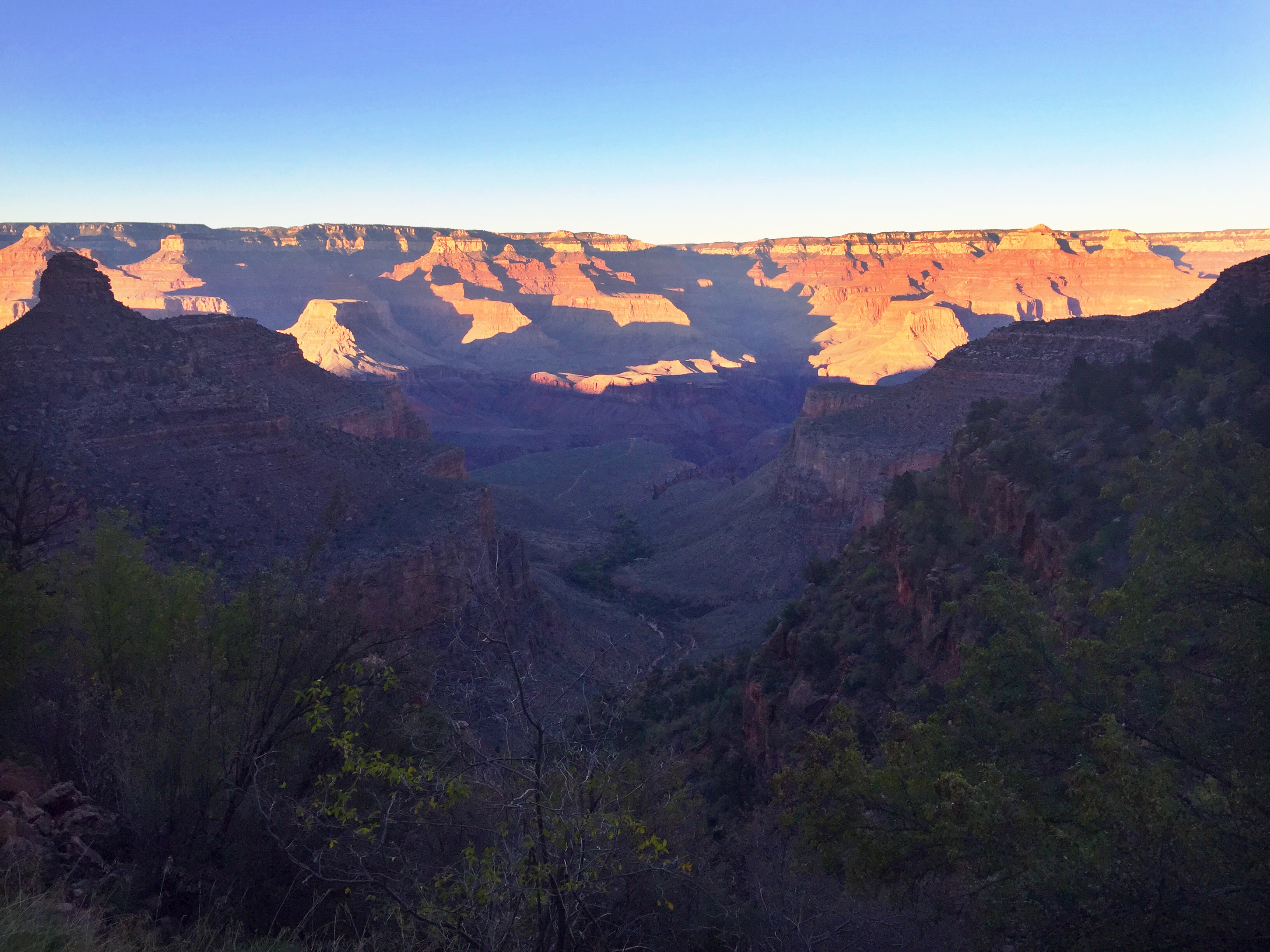
Sunrise slowly lit everything up around us at 6:30am. Here's looking back at the South Rim, around mile 10.

The first rays of sunlight creeping into the canyon, looking back at the South Rim, around mile 10.

Our headlamps worked well, we kept a good enough pace as to not lose our footing, and we moved downhill at a quick clip. It took us a little under two hours to reach the valley floor, 7.5 miles blown by like that.

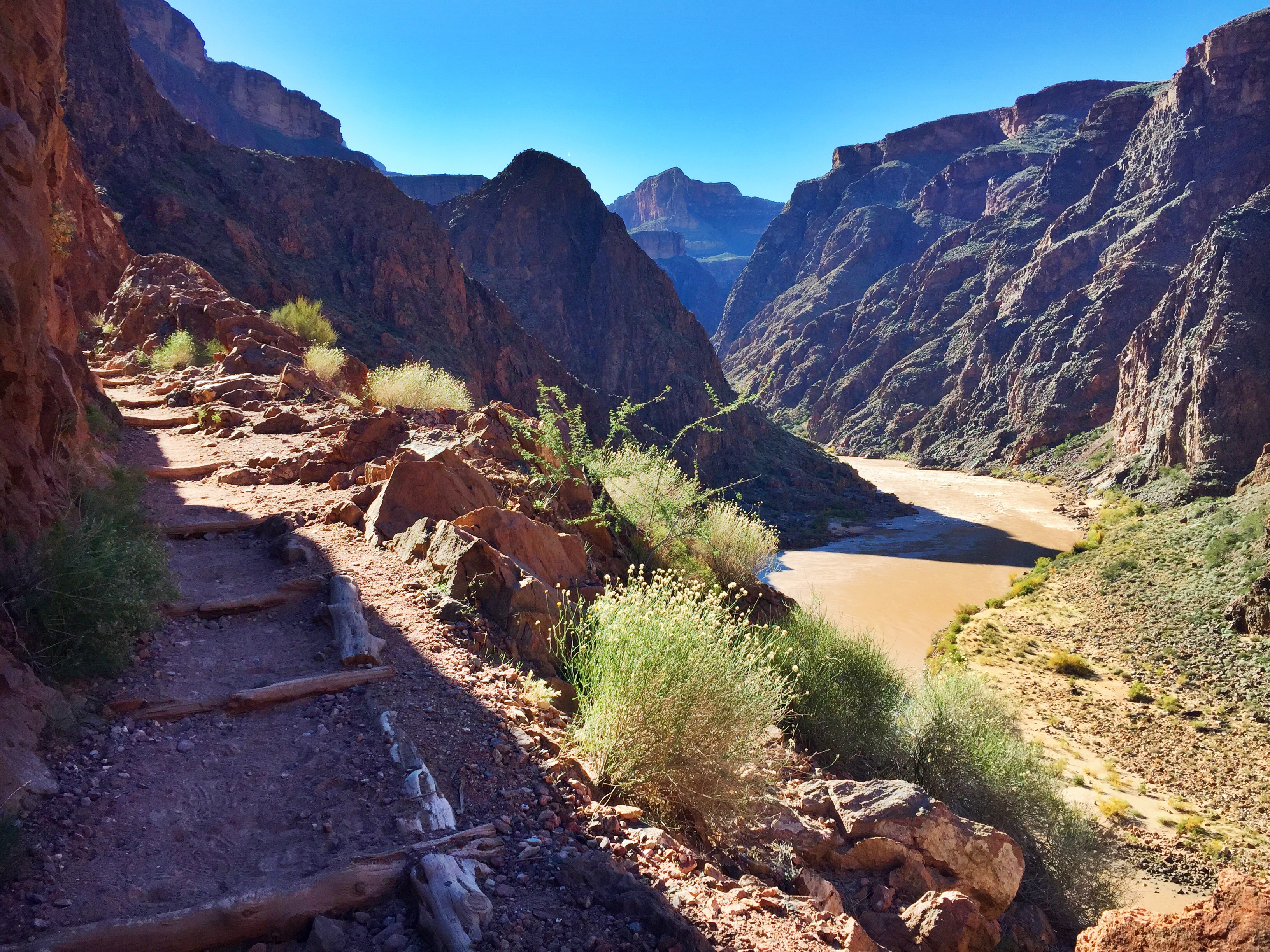
We were walking in the pitch dark for what turned out to be one of the most beautiful parts of the trail, where it winds along the Colorado River with two-thousand foot canyon walls bordering your either side. This flat portion of trail, with an ever-gradual incline, continued from Phantom Ranch for 7.3 miles to Cottonwood Campground, where we took our first break. Nina and I ate Clif bars and energy gels while watching campers waking up and filling up their water for the day. We were both carrying 2 liters that morning, so we made mental notes to stop by here on our way back through.

Sunlight slowly creeping into the canyon, around mile 11.

Sunlight slowly creeping into the canyon, around mile 11.

A steady incline takes hikers from Cottonwood to the 8,000 ft. North Rim over 6.3 miles, passing by a few other campgrounds and stopping points (which we did not use to their name). Finally, the entire canyon was lit up with the morning and we could clearly see the towering red walls around us.

When we departed Cottonwood Campground I removed the trekking poles I’d had strapped to my backpack, de-collapsed them, and used them for the rest of the climb. Many R3’ers choose not to bring poles, but that day I saw around half of the runners we ran into on the trail using them – and I found that they psychologically saved me on the final ascent up the South Rim.

Ascending the canyon walls to the North Rim, around mile 17.
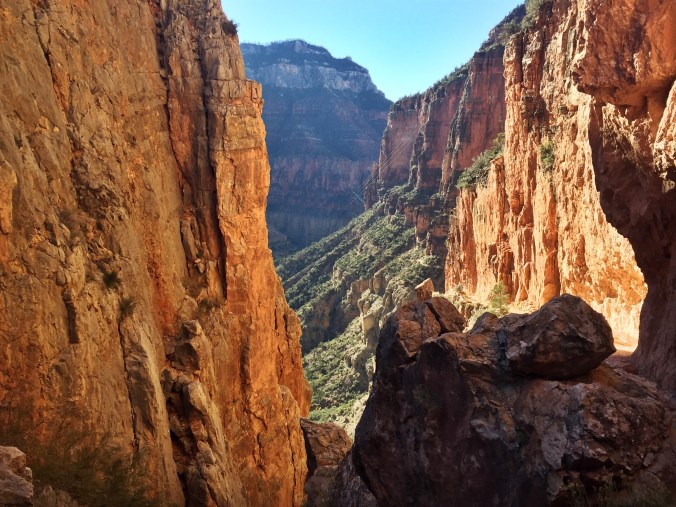
Ascending the canyon walls to the North Rim, around mile 17.

Mile 19 or so, approaching our 22 mile turnaround point.

Mile 19 or so, approaching our 22 mile turnaround point.

We reached the North Rim at around 9:50am, where we were greeted by an ultra-runner friend, and where we promptly sat down and inhaled our lunches as quickly as we could. We weren’t sitting for more than 10 minutes before the chilly morning air and altitude began to set into our bones, so again we took off.

All smiles at the North Rim halfway point!

All smiles at the North Rim halfway point! Mile 22.

Not long after departing the thin air at the North Rim, Nina and I split up. She’s speedy as hell on these downhill sections, whereas I don’t trust my footing as much, am much more careful especially around steps. Plus, this was my first time seeing the Grand Canyon in all its glory, so our split gave me the chance to stop and take photos and enjoy the canyon at my leisure.
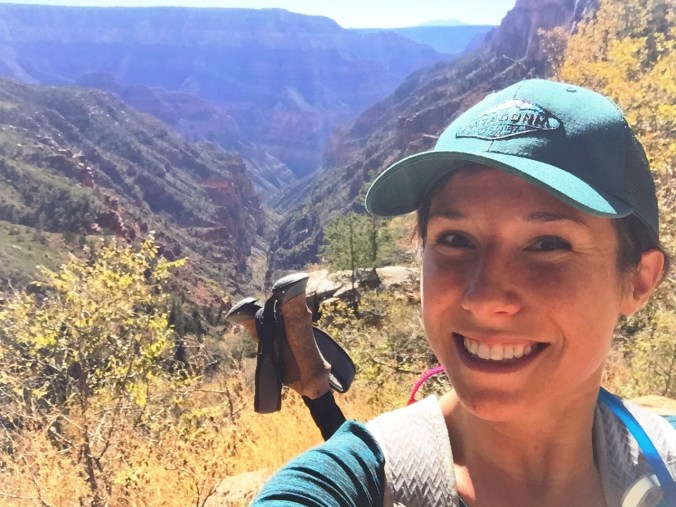
After having begun my descent back into the canyon - there's no turning back now!

After having begun my descent back into the canyon – there’s no turning back now!

One of the dozens of bridges crossing the canyon between both rims.

One of the dozens of bridges crossing the canyon between both rims, around mile 25.

I stripped off my leggings and jacket. The day was heating up, and I could feel the sun draining me even though the valley floor had a high of 67 degree Fahrenheit. The heat-absorbing walls of the Grand Canyon would trap the sun and raise that high temperature to at least 80 degrees.

Three miles down the North Rim, I ran out of water. No problem, I thought, knowing that in 3.3 miles I’d pass by Cottonwood Campground where I could refuel with the pump I saw campers using that morning. Unfortunately, and as Murphy’s Law would have it, there was a pipeline break during the morning and the Cottonwood faucets were turned off by the time I arrived. I normally wouldn’t have thought twice, but I’d been going three miles, and had 7.5 miles ahead of me, and with the increased heat of the canyon – I didn’t know what kind of shape I’d be in after over 10 miles running without water.

Lucky for me, I ran into a couple with the same problem, except that their problem had an easy solution: A small, palm-sized water filter. They filled me up using water from the river and I took off again.

Flat, slightly-downhill traverse to Phantom Ranch.

Flat, slightly-downhill traverse to Phantom Ranch, around mile 28.

As I mentioned before, this must have been my most favorite part of the trail, winding along the Colorado River with the canyon walls jutting up to either side of me. I also took more time here, running when I felt like it, and following the pace of other joggers and hikers when I wanted to give my legs a break.

Nina and I had met a hiker that morning who I ran into here again. This man could not have been younger than my parents, and had hiked the R2R2R the day before, repeating his journey today. He followed up by saying “Yesterday was my 90th time completing the rim to rim to rim, so today must be my 91st in 12 years.” Passing him a second time, he gave me a slap on the back and said I had a great pace for my first time. I ran on.

Getting close to Phantom Ranch, around 33 miles.

Getting close to Phantom Ranch, around 33 miles.

Reaching Phantom Ranch, around mile 35.5, was the first time I really refilled my water since we’d started. I loaded up a little over 2 liters (since I was carrying a 3 liter bladder), but the stale taste of water nauseated me in the shade. So I walked over to the general store, bought a large, ice-cold lemonade, and sat on the porch with my feet kicked up, checking my map and chatting with other hikers I’d met throughout the day. After halfheartedly trying to eat part of my second Clif bar, I downed my lemonade and raced ahead of a mule pack to complete the last 10 miles of my journey.

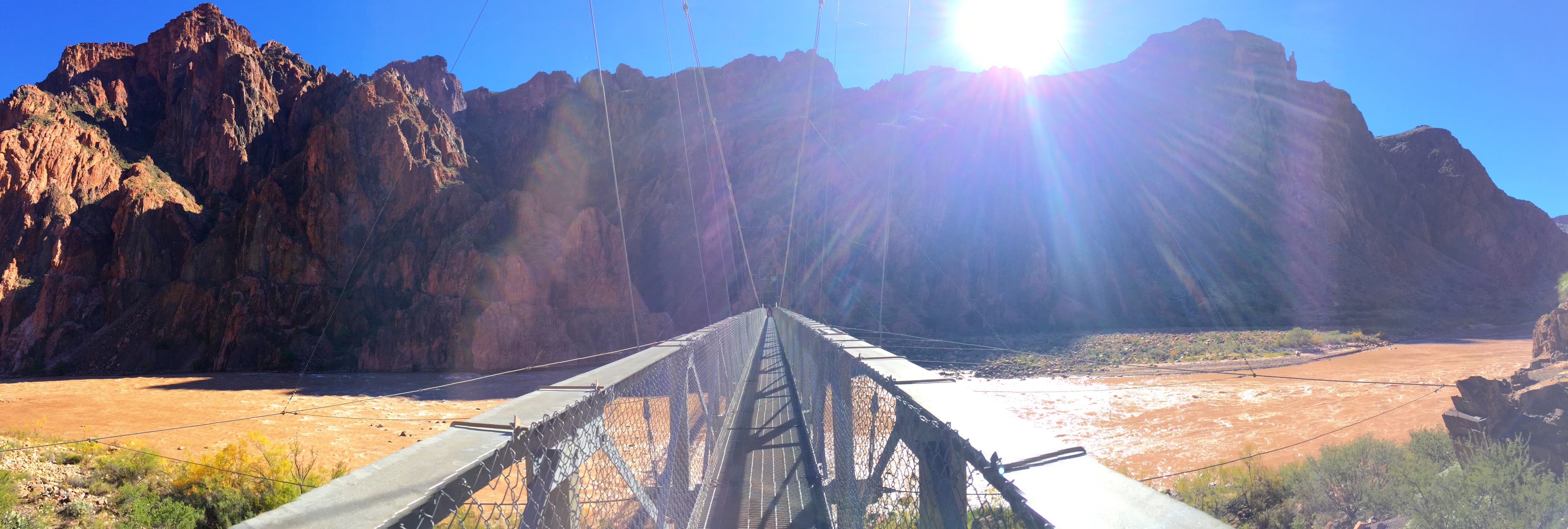
Crossing the Silver Bridge to the Bright Angel Trail, around mile 36.

Crossing the Silver Bridge to the Bright Angel Trail, around mile 36.

Looking back on the Silver Bridge.

Looking back on the Silver Bridge over the muddy Colorado River.

I pulled my trekking poles out for the second time of the day for this final ascent. Crossing the muddy Colorado River across the famed Silver Bridge of the Canyon, I knew I wouldn’t actually see my goal of the South Rim for another few hours. Even though you’re slowly pulling yourself up towards the sky, the Bright Angel Trail weaves within the canyon for miles before dropping you out at its busy trailhead.

Ascending the Bright Angel trail, still near mile 37.

Ascending the Bright Angel trail, still near mile 37.

This was the first part of the trail that started to really hurt. I’d been hiking alone for a few hours, passing slower groups, and eventually found a park ranger catching up with me. I asked if I could follow her to match her pace since she was moving quicker, and we talked for about an hour until we reached Indian Campground.

This ranger had plenty of questions for me, since she said people completing the Rim3 were usually, well, running. She mentioned that at the park opening this year on the first of May, 700 runners showed up to attempt the entire 46 miles. Many wouldn’t make it. Additionally, she said she couldn’t believe how many people attempted the R2R2R during the middle of the summer, when heat in the canyon rises to 130 degrees. Overall it sounded like runners and hikers are generally ill-prepared, without having done much environmental research, resource planning, or physical training.

Since the Grand Canyon’s limited resources (water, human waste disposal) isn’t meant for the numbers that recent influxes have been bringing in, the Rim to Rim to Rim challenge may soon see a permitting process.

Getting close to the Indian Campground, around mile 41.

Getting close to the Indian Campground, around mile 41.

Looking down at the valley, partway up the South Rim, around mile 42.

Looking down at the valley, partway up the South Rim, around mile 42.

Those last 4.5 miles from Indian Campground… whew. Even though the Bright Angel Trail was much more gradual and all-around easier than our descent down the South Kaibab, there was just something about passing the 40 mile marker that made my legs want to give out. So I just straightened my back, held my head up, and powered through past day hikers, backpackers, and leisure walkers. I had a goal: Reach the South Rim by sunset.
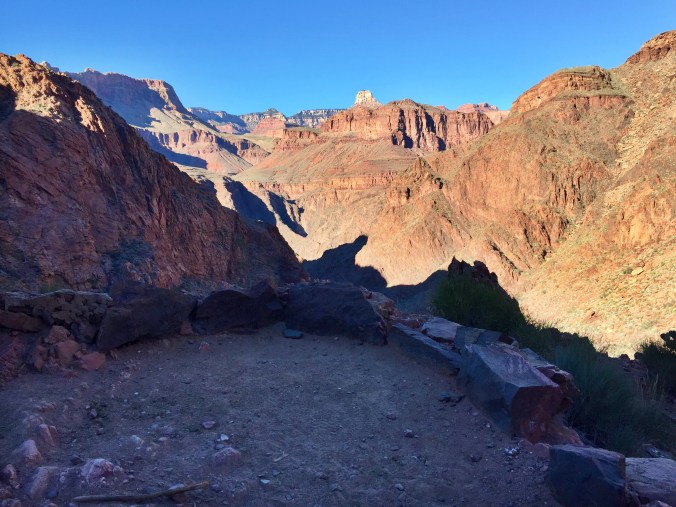
Mile 43. So, so close.

Mile 43. So, so close.

The Grand Canyon turned out to be like so many of the other beautiful places I get to visit, as a person who loves exploring new trails. It was new, exciting, jaw-dropping, and completely worthy of the attention and praise it receives as one of the Seven Natural Wonders of the World. But like so many other places, photos and words don’t do it justice. I could have taken a hundred photos and written a dozen blog posts, but nothing could encapsulate the way the air cooled down as the sun began to creep behind the canyon walls. Nothing could capture the happiness and peacefulness on trail-goers faces as they walked with their necks craned upwards, smiles smeared across their faces. Maybe even I’ll forget how that felt, and how this place looked like, until I come back again.
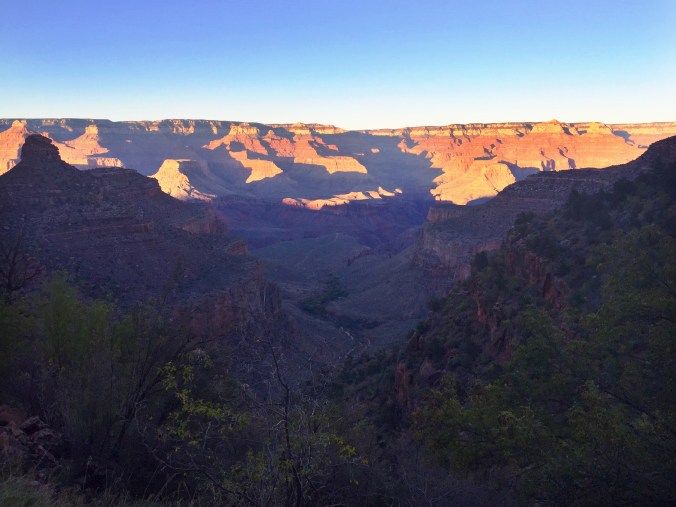
Mile 45, counting down the minutes until the light fades from the day over the canyon.

Mile 45, counting down the minutes until the light fades from the day over the canyon.

I reached the top of the Bright Angel Trail at 5:45pm, just 5 minutes before the 15 hour goal Nina and I had set – though I was a full 45 minutes behind her, she ended up beating her previous time by over an hour! Reflecting on the time I spent alone, I was happy I had taken more breaks, stopping for more photos, and got to kick my feet up at the lodge before my final trek… but at the same time, all I could think about was how much faster I could go the next time.

I ended my day without any broken spirits or blisters. In fact, I was only sprawled out on our hotel room floor like a starfish for a couple of minutes before showering and dragging our sore bodies to the Bright Angel cafeteria, where we enjoyed sugary drinks and carbohydrate-loaded dinners.

If not for the deliciously addictive lemonade at Phantom Ranch, I’ll be back to see the Grand Canyon one day again soon.
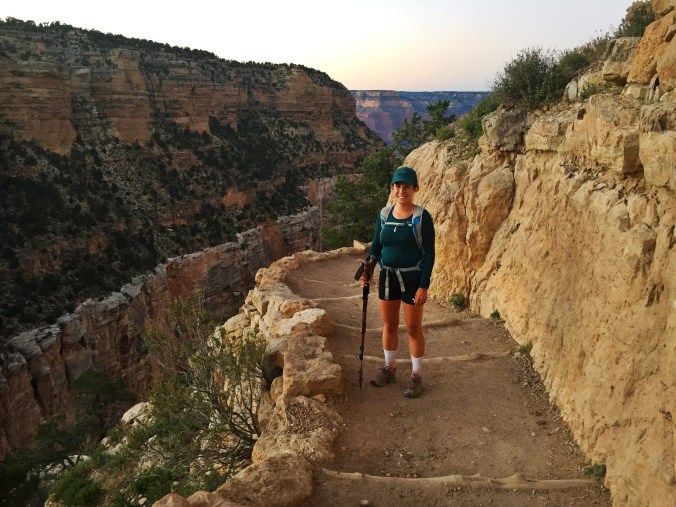
Mile 46, sore but happy smiles.

Mile 46, sore but happy smiles.

QUICK STATS

  • Length: 46 miles
  • South Rim: 6,800 ft.
  • North Rim: 8,000 ft.
  • Elevation gain: ~ 11,000 ft.
  • Time: 14 hours 55 min

White Mountain Peak via Barcroft Station; Third-highest Peak in California

White Mountain Peak (14,252′) stands above every other highpoint in Mono County, the White Mountains, and is just 250′ shorter than Mt. Whitney, the tallest peak in the contiguous United States at 14,505′. Its claims are impressive, but the climb isn’t as demanding or romantic as some of its Sierra neighbors. In fact, the most popular route takes hikers up a gravel 4WD road straight to the summit.

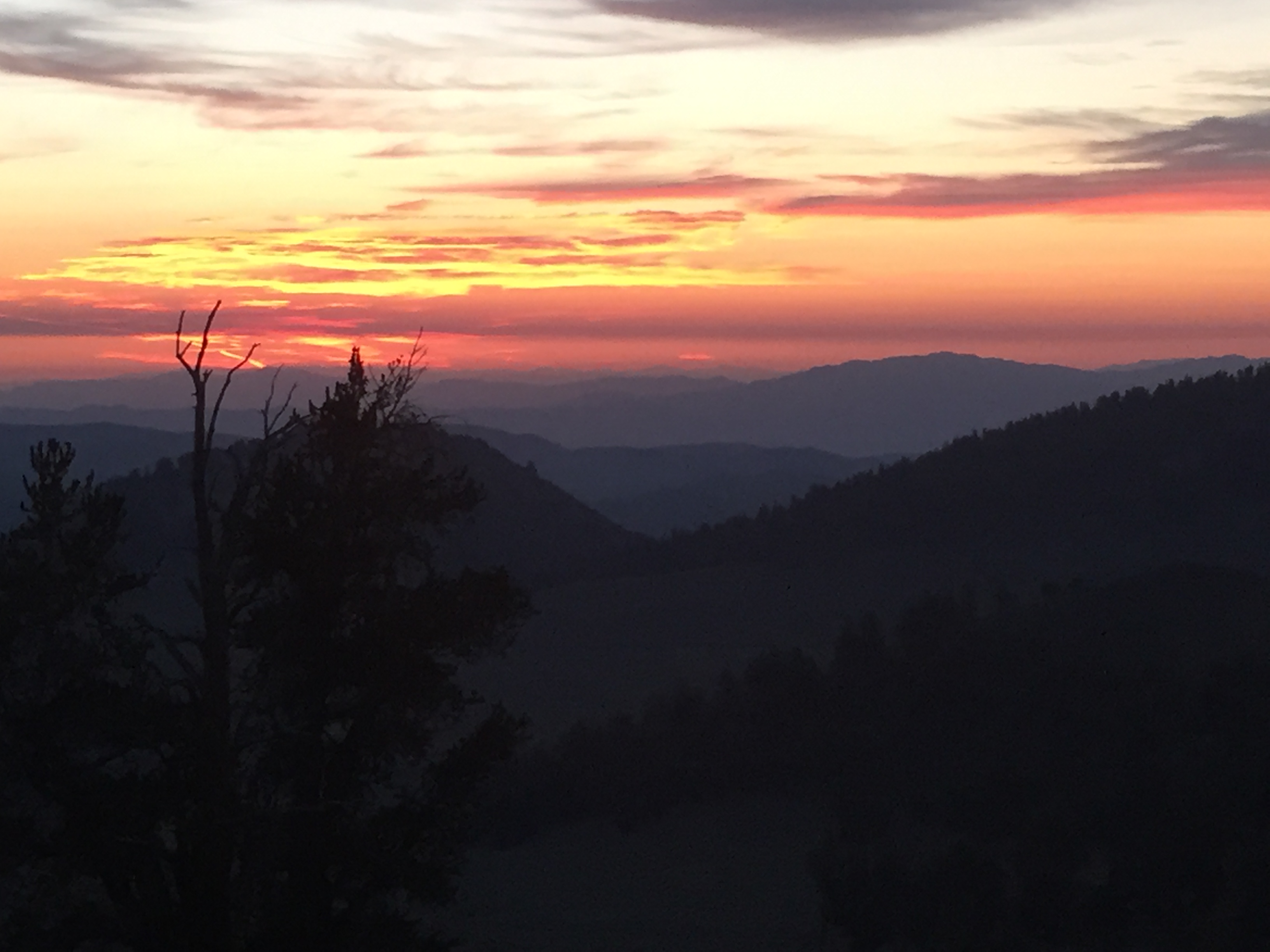
Sunrise over the White Mountains.

Sunrise over the White Mountains.

Neither of us were completely prepared for the drive in to the White Mountain Peak unofficial trailhead. We’d slept at the cozy climbing-themed Hostel California in Bishop the night before, and took off towards Big Pine at 4:45am. Heading south on US-395, we turned left (east) onto US-168, which is a windy two-lane road that ascends into the White Mountains. After 13 miles on this highway, we found the clearly-marked White Mountain Road on our left (north). This road starts off nicely paved, continuing for 9.5 miles to Schulman Grove, where the pavement ends and a 17-mile 4WD gravel road begins.

Now, for contrast’s sake, the National Forest Service declares the 6-mile road leading to the Queen Mine route of Boundary Peak to be a 2WD road – but we found the White Mountain Road to be in much better shape and much more passable than Boundary’s (you can read that blog post to get a better idea of what we put my Jeep Liberty through). Either way, those 17 miles on gravel stretched out a lot farther than we initially expected, and we didn’t reach the parking area at Barcroft gate until 6:30am – making our total travel time from Bishop 1 hour & 45 minutes.

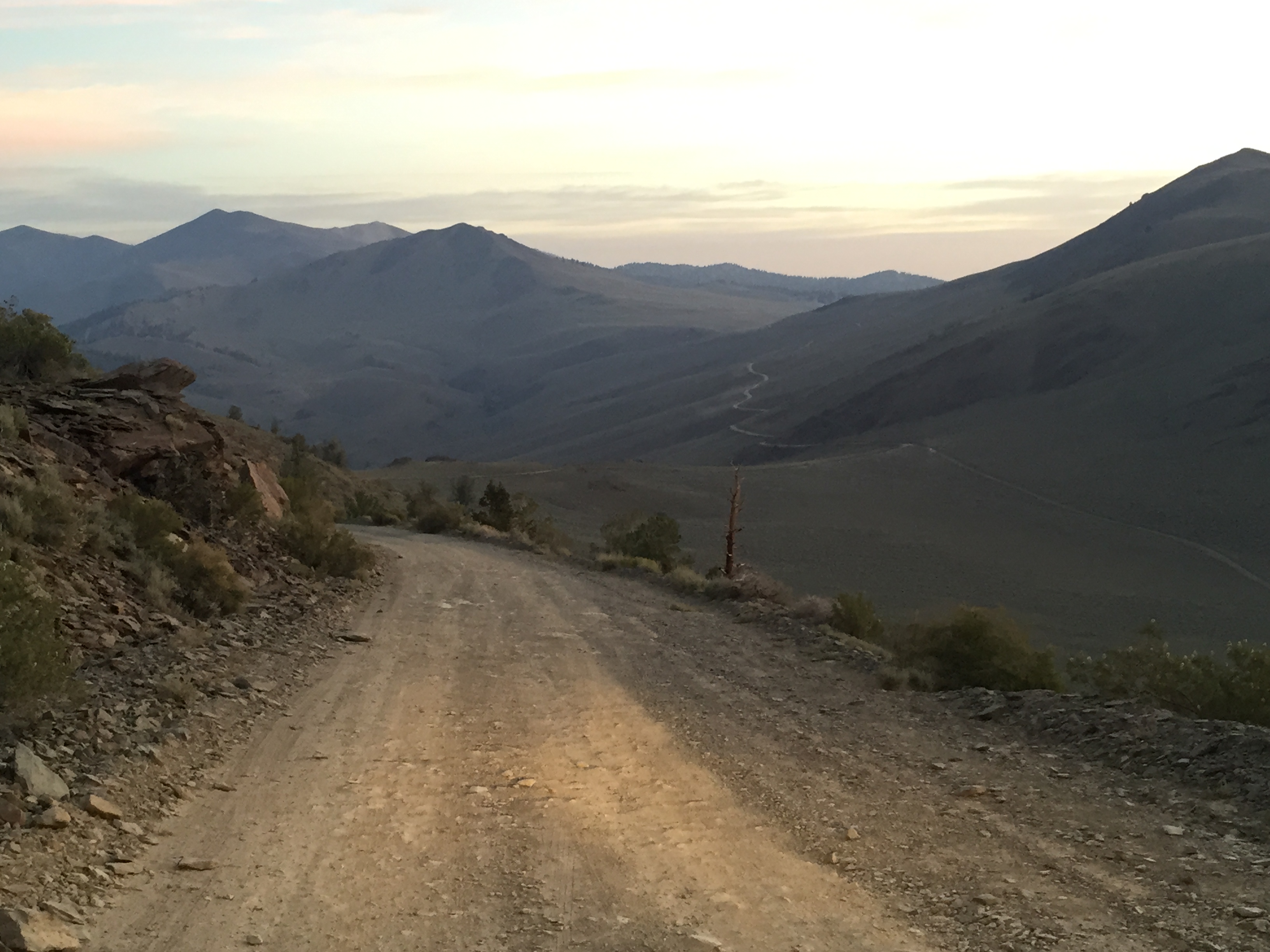
Far-off views of the long, windy 17-mile road that takes you to Barcroft gate.

Far-off views of the long, windy 17-mile road that takes you to Barcroft gate.

Our first view of White Mountain Peak in the distance.

Our first view of White Mountain Peak in the distance.

Nina and I had just climbed Boundary Peak (13,140′) the day before we took off to White Mountain, so we were feeling strong and acclimatized. The “trailhead” begins at the Barcroft gate, about 1.6 miles below the facility (despite the sign reading 2 miles), at 11,670′. This means you only have about 2,600′ total elevation gain to look forward to, though the rising and falling slopes leading to the base of the mountain add a few hundred feet to this total.

Barcroft gate; the official start of the White Mountain Peak climb.

Barcroft gate; the official start of the White Mountain Peak climb.

Here’s a breakdown of our timing:

  • 4:45am: Left Bishop, CA.
  • 6:30am: Arrived at trailhead (1:45 travel time).
  • 6:40am: Departed trailhead.
  • 9:15am: Arrived at White Mountain Peak summit.
  • 9:25am: Descended from summit.
  • 11:15am: Arrived back at the car.

Barcroft Station - Check out that white sedan, if he can make it, I'd guess nearly any car could!

Barcroft Station – Check out that white sedan, if he can make it, I’d guess nearly any car could!

Like I’d mentioned above, hikers follow this gravel road for 7.5 miles all the way up to the summit. The elevation gain trailhead to summit is around 2,500′, but because the trail slopes up and down throughout, our total elevation gain was about 3,500′. There is a more challenging route up the West Ridge described by Summitpost, but this entails gaining 9,000′ of elevation in just 10 miles. Nina and I had neither the time, nor desire, to take on that endeavor.

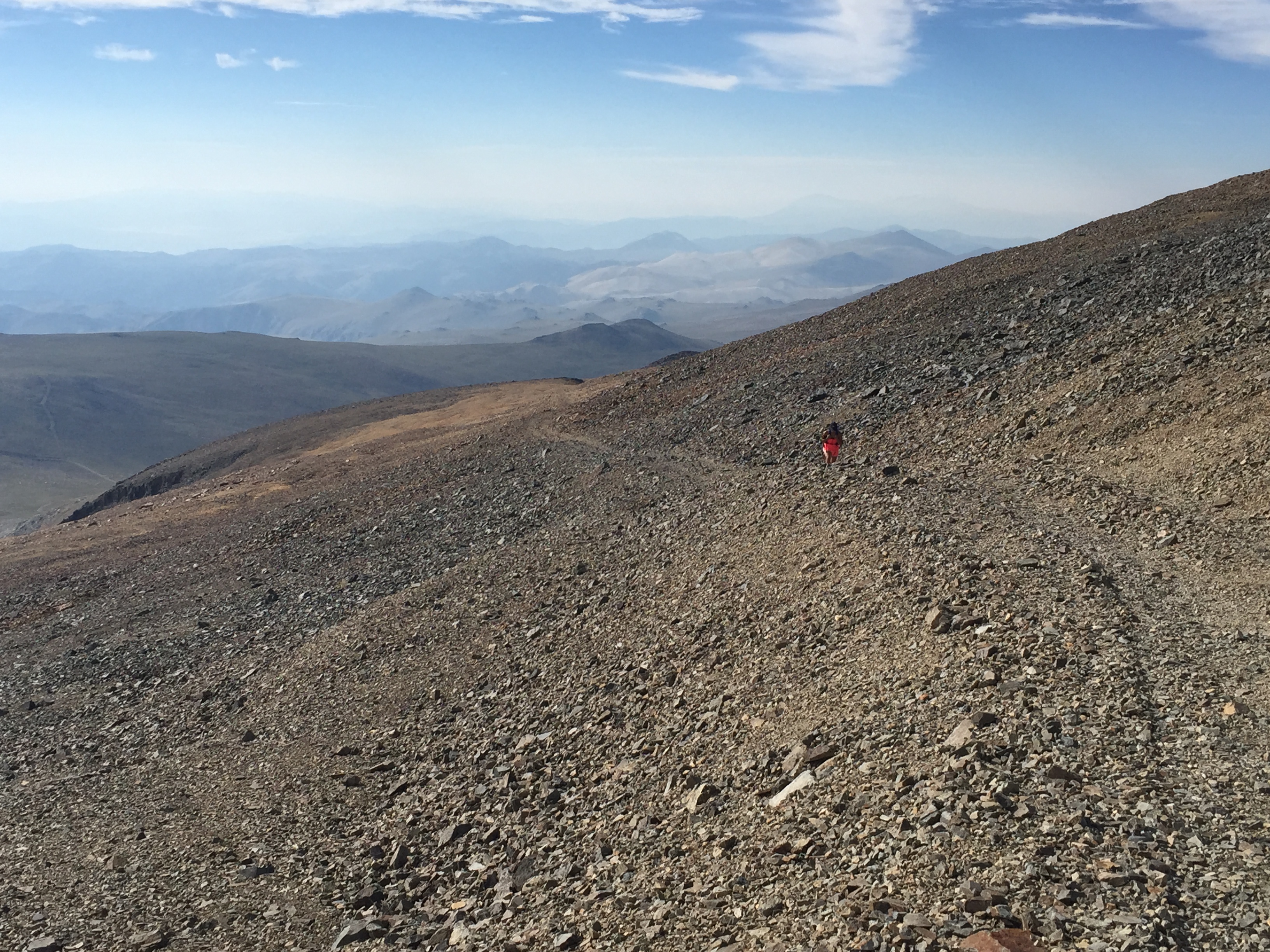
Nina making her way up the last couple hundred feet to the summit.

Nina making her way up the last couple hundred feet to the summit.

We made a few extra shortcuts on the last few hundred feet to the summit. While the gravel road continues to wind in steep traverses, there are some crude hiker trails that are easy to follow, and large enough rocks for scrambling.

The White Mountain Peak summit cabin.

The White Mountain Peak summit cabin.

Before we knew it, we were on top! Most notably, we were impressed that it wasn’t as cold on the summit as we expected. Everyone we’d passed throughout the day (3 different groups) were bundled up in pants and jackets, while we skipped along in hot pink shorts and tank tops. We were lucky enough to have a thin cloud coverage all day, so we were shaded from the 100 degree heat infecting the valley.

Nina and I on self-timer at the summit of White Mountain Peak.

Nina and I on the summit of White Mountain Peak.

“Descending” the long approach that leads to White Mountain.

We were up there!

We were up there!

Like many descents, this one flew by, and before we knew it we were back at the Barcroft station mid-morning. Because Nina’s a badass climbing machine, she suggested we trail run the last few miles that gradually descended back to our car, which saved us some extra time. We said goodbye after a successful high-altitude weekend and promised to reconnect over another 13er or 14er soon.

QUICK STATS

  • Length: 15 miles
  • Trailhead: 11,670′
  • Summit: 14,246′
  • Elevation gain: 2,576′ (3519′ total with up & down slopes according to Nina’s Runkeeper)
  • Time: 5.5 hours

A few resources I found helpful before this climb…

Boundary Peak via Queen Mine; Highpoint of Nevada

Nina and I met in June while climbing Mt. Baker and immediately bonded over this shared ambition to explore the highest peaks of the west coast. Just a month after exchanging contact information we put together a plan to meet halfway between San Francisco and Orange County to hike up the tallest mountain in Nevada, Boundary Peak (13,140′).

And actually, two days before we were meeting, we decided to tack White Mountain Peak (14,252′) onto our travel plans for a 13er and 14er two-fer weekend.

Let’s talk about getting there. You’ll find the beginning of a gravel road 9 miles east of Benton off of Highway 6, on your right (south) side of the road, just across from an abandoned ranch (see Summitpost for more detailed directions). I realize now that many of the sites I was using as a reference were as many as a dozen years old, and the 6.2 mile gravel road between Highway 6 and Queen Mine has severely deteriorated since then. I drive a 4WD Jeep Liberty Sports Edition, and sincerely doubted my car’s ability to get through the ruts and deep gouges that tore up this washed-out road. Maybe the conditions have worsened in just the last two years – a trip report I read from 2013 said this road was “easy peasy” in a 4×4 pickup.

In comparison, the following day we drove up the arduous 17-mile White Mountain Peak gravel path, which is labeled as a 4WD-only road by the National Forest Service, and we found this much more passable than the Queen Mine route. Either way, we were happy to get out of the car to start our climb.

We left my car at Queen Mine proper, an obviously large flat area next to a couple of open mine shafts. There was about 700 vertical feet, 1 mile, of road walking until we reached the trailhead register at Kennedy Point and our real hike began.

The Queen Mine trailhead register.

The Queen Mine trailhead register.

This first part of the hike was steep, and I could feel the altitude at 10,000 ft. sucking at my lungs. It didn’t take too long to ascend this first ridge, which flattens out after just a thousand feet into a nice sloping meadow where you can see wild horses, deer, and marmots. The Trail Canyon saddle slopes down to the left of this ridge and is unofficially “marked” with a pile of rocks and logs that created a perfect morning break spot to fuel up and hydrate before tackling the peak.

Here’s an overall breakdown of our timing:

  • 7:00am: Left Queen Mine trailhead
  • 8:30am: Took a break at the Trail Canyon saddle
  • 10:15am: Reached the summit of Boundary Peak
  • 11:00am: Departed the summit
  • 12:30pm: Took a second break at the Trail Canyon saddle
  • 1:45pm: Arrived back at the car
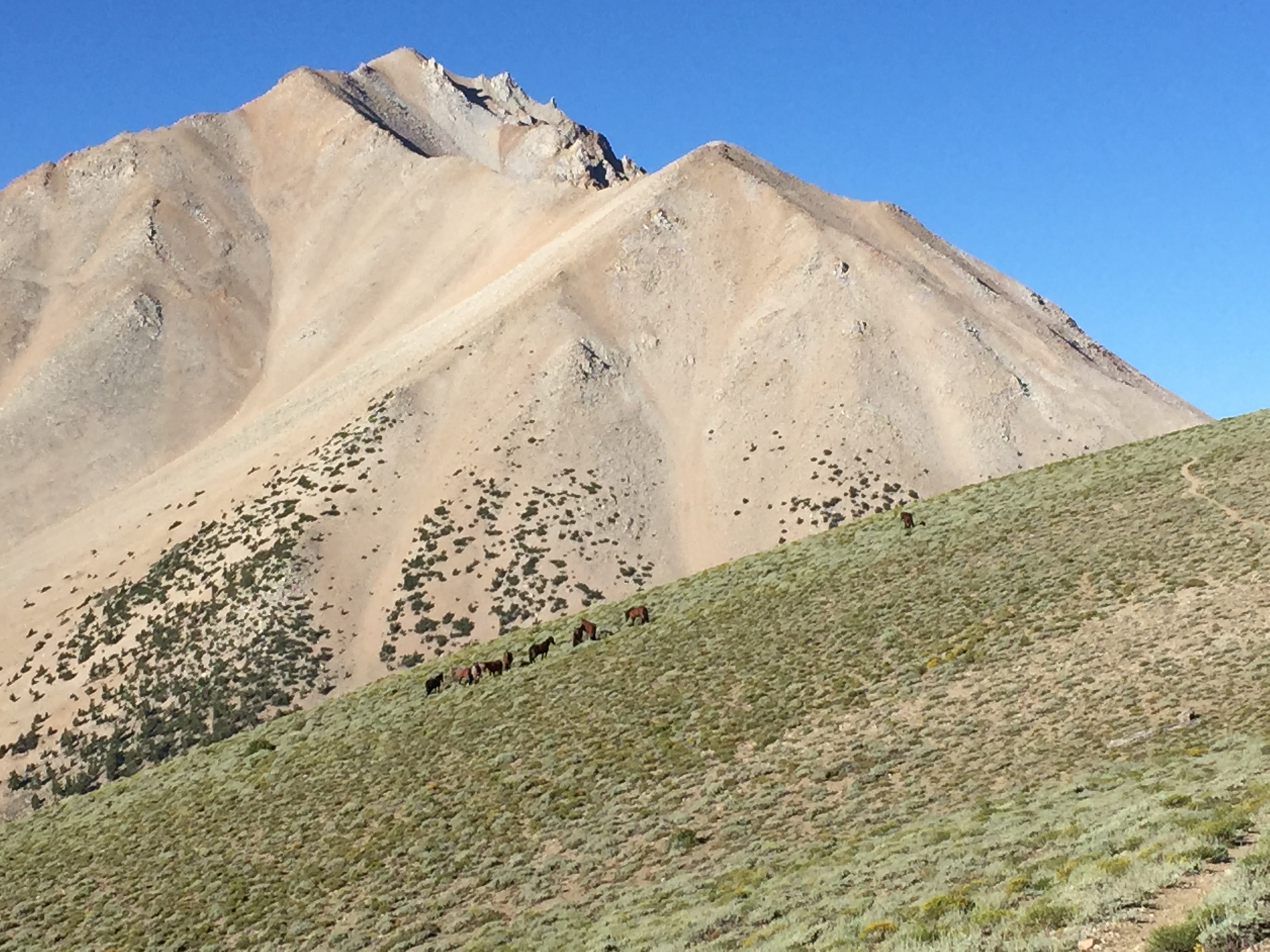
Our first views of Boundary Peak, a little less than a thousand feet above the trailhead... with wild horses!

Our first views of Boundary Peak, a little less than a thousand feet above the trailhead… with wild horses!

These first views were quite intimidating, but it was really only from this point that we could see the entire mountain. As soon as we descended to the Trail Canyon saddle, we could only see that first false-summit on the right. In fact, we’d forgotten about this image and believed that we were walking up to this first (much shorter) peak, to the actual summit.

Finally heading up the actual peak.

Finally heading up Boundary Peak.

You can see what we thought was the true summit here, when we really had an extra 1.5 hours and near a thousand vertical feet to gain still. The trail was reasonably sloped, covered in rocks and scree. It might’ve taken us just as much time to go up as it did to return since we were constantly slipping on the unstable conditions.

Looking down at Trail Canyon saddle. Farther to the right you can see the slightly uphill path that leads to Queen Mine.

Looking down at Trail Canyon saddle. Farther to the right you can see the slightly uphill path that leads to Queen Mine.

Our favorite view of Boundary Peak.

Our favorite view of Boundary Peak.

This was the “ah-hah” moment where we realized we were very, very miscalculated in our summit estimating. Overall, the trail was well-defined, and we never had too much of a problem finding the path once we’d wandered off. There were parts we chose to follow rock paths and bouldered up to avoid unnecessary elevation gain or loss, but the ridge was relatively easy to follow.

Looking across Nevada at the summit.

Looking across Nevada at the summit.

Reaching the summit felt like quite the accomplishment! We could see across Nevada and over to the Sierras and Yosemite region of California. On the top, Montgomery Peak (13,442′) loomed back at us from California. We speculated where the state border actually laid, and contemplated a second summit, but couldn’t spot a good trail and noted that the final 800 or so feet looked a little too sketchy.

Summit of Boundary Peak.

Summit of Boundary Peak, looking across to Montgomery Peak, a few hundred feet higher.

Looking down the ridge we ascended from the summit.

Looking down the ridge we ascended from the summit.

Returning down the way we came, we used the ridge above as a natural handrail and made our own path until we met with the Trail Canyon saddle again. We had run into 3 other groups during the day, and all 3 had also come from Queen Mine. Notably – we were also the only women we saw on the mountain that day (girl power!)

Returning through the meadow until dipping down to the left to Queen Mine.

Returning through the meadow until dipping down to the left to Queen Mine.

Looking down the valley from Queen Mine.

Looking down the valley from Queen Mine.

Below you can see where we chose to park – at the entrance to the abandoned Queen Mine. You can faintly see the road continuing up the ridge on steep switchbacks that take you 700′ up to Kennedy Point and the official trailhead. I never got a shot in the morning, but there was enough room for a few cars and tents with a firepit just to the right of my Jeep. By the time we arrived back at the car in the early afternoon, it was hot. The cool breeze that had kept us company at altitude disappeared once we’d reached the valley. Since this is one of the most remote desert hikes, and there are no sources of water along the trail, I’d highly recommend bringing three liters of water.

This is my recommended parking spot, next to the Queen Mine, before the super-rugged road conditions start to the traditional trailhead.

This is my recommended parking spot, next to the Queen Mine, before the super-rugged road conditions start to the traditional trailhead.

Leaving the trailhead, we were back in Bishop by 3:00pm… With just enough time to feed our hiker hunger and get ready for our ascent of White Mountain Peak in the morning.

QUICK STATS

  • Length: 10.4 miles
  • Trailhead: 9,200 ft.
  • Summit: 13,146 ft.
  • Elevation gain: 4,000 ft.
  • Time: 6:45 total, 6:00 moving

A few resources I found really helpful before this climb…

Alamere Falls via the Coastal Trail

On Saturday we unknowingly ventured along a northern portion of the same Coastal Trail that you can follow along Muir Beach to Rodeo Beach, this time starting 10 miles north of Stinson Beach. Alamere Falls has made a name for itself as a beautiful and popular Bay Area getaway spot. From San Francisco, it takes about 1.5 hours, mostly due to the scenic winding of Highway 1.

This hike was similar to other seaside trails around The Bay; soft ground, exposed with little shade, and extremely populated by the early afternoon. As we’d been warned, we had to park out car about a quarter mile down the road from the trailhead since the parking lot was full by noon. I didn’t include a time estimation below, because we were with a group of 7 and took our time making our way through the trail, stopping to picnic at Bass Lake and spending a while at the turnaround spot: Alamere Falls.

Bass Lake

Bass Lake

The last few miles to the falls open up on another ocean view, and that’s when you’ll want to look out for an old trail sign on your left covered in graffiti that serves as the cutoff to Alamere Falls. At this point, you will have gone about 3.75 miles and only have .4 left on a narrow trail that takes you straight to the oceanside.

The falls drops a couple hundred feet down to the beach, which will be even more crowded than the upper areas of the trail. And even though California is full-force in its drought, the falls were still running with plenty of water. Speaking of water, our group grossly misestimated the heat of the day and we were without water the last couple miles of our trek – which should serve as an easy reminder for next time. I noticed that most hikers brought swimsuits and towels to take full advantage of their beach destination.

The long, dusty walk back to the car was eased with more views of the ocean. I’ll be returning here soon to try a trail run, a little earlier in the day, and with more water.

QUICK STATS

  • Length: 8.3 miles
  • Elevation gain: < 1000k ft.

Montara Mountain from Graywhale Cove State Beach

This weekend I ventured to a popular seaside trail that’s just 20 minutes south of San Francisco. Leaving the city using I-280, I took the Highway 1 exit for just about 10 miles to one of the northern-most trail entrances. There are actually four different routes you can take up to the peak of Montara Mountain, depending on which trailhead you choose to park at:

  • 3.5 miles from San Pedro Valley County Park trailhead.
  • 3.9 miles from Mc Nee Ranch trailhead.
  • 4.1 miles from Farralone Cutoff, Montara.
  • 4.8 miles from Graywhale Cove SB.

unnamed

This parking lot will get full as the day goes on – this is what it looked like at 10:30 am. The first quarter-mile of the hike climbs upwards and then slopes out into a flat trail that continues around the hills. This trail makes for a very popular and crowded place for day hikers, trail runners, and cyclists.

unnamed-1

Follow the path south, until it turns inward. Within a half mile the trail will fork into two directions: A steep upward slope to your left (an unofficial “shortcut” that will take 1.5 miles off), or continuing to the right, where the trail makes a slow, windy ascent through some shade on a fire road.

unnamed-2

On the fire road, looking up a few miles and about 2,000 vertical feet to the top of Montara Mountain.

unnamed-3

At the top of this forested section, the fire road runs into the end of the shortcut before continuing up incredibly steep, exposed, dusty slopes. There’s no shade for the last few miles here, so you’ll want to bring some kind of sun protection.

unnamed-4 unnamed-5

This dusty, rocky trail continues up a few more miles to the summit. Along the way are cutoffs to other trails, and I ran into a lot of other hikers and runners who had joined up near the top from different directions around the mountain.

unnamed-6

At the top, you’ll enjoy valley views as well as a stretched-out look at Pacifica and its popular beaches. Since this was a pretty grueling incline without any place to hide from the sun, I promise you’ll enjoy the way down much more than the ascent!

unnamed-7

QUICK STATS

  • Length: 9.6 miles
  • Elevation gain: ~2,000 ft.
  • Time: 2 hours

Mt. Rainier Summit Climb

Photos from Mt. Rainier, July 7-8, 2015 with Mountain Gurus.

  • Summit: 14,409 ft.
  • Elevation gain: 9,000+ ft.
  • Paradise to Camp Muir: 9:15am – 2:45pm (July 7)
  • Camp Muir to Summit: 11:30pm – 5:45am
  • Summit to Camp Muir: 6:00am – 10:15am
  • Camp Muir to Paradise: 11:30am – 4:00pm
  • Total time: 16.5 hours (July 8)

img_04921

Quarter mile into the hike from Paradise.

img_04951

img_04961

img_04971

img_04981

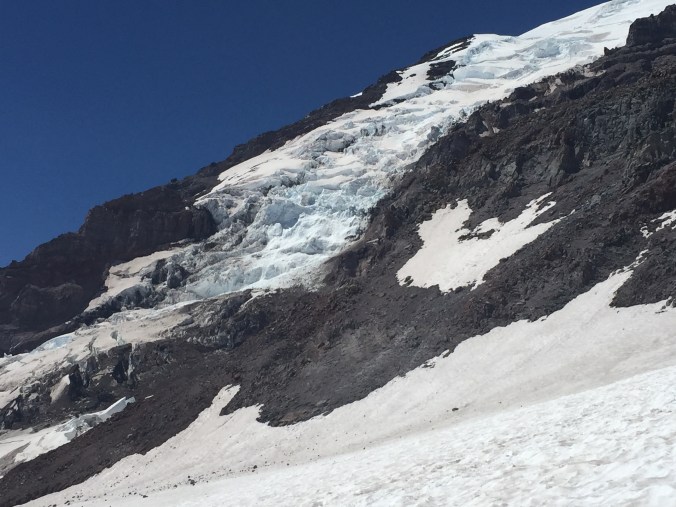
Threatening ice fall area that’s begun melting away in this summer’s high temps.

img_05001

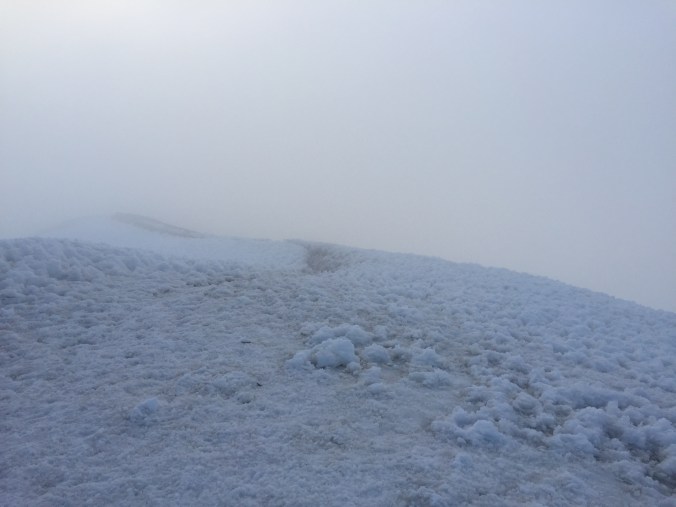
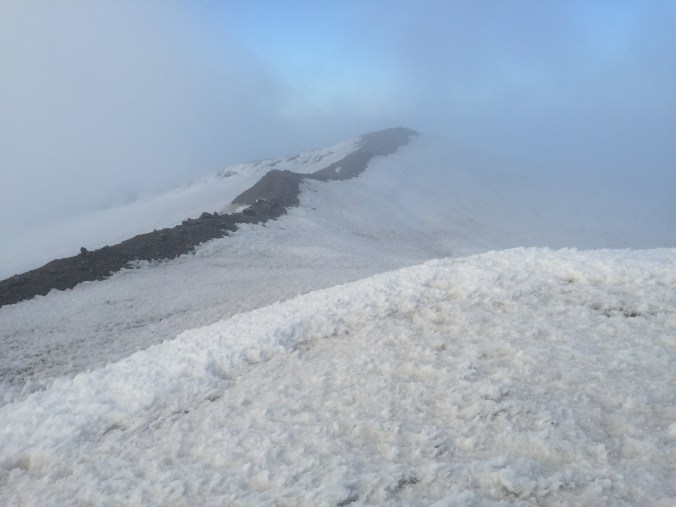
Summit of Mt. Rainier at sunrise with little to no visibility.

img_05031

img_05111

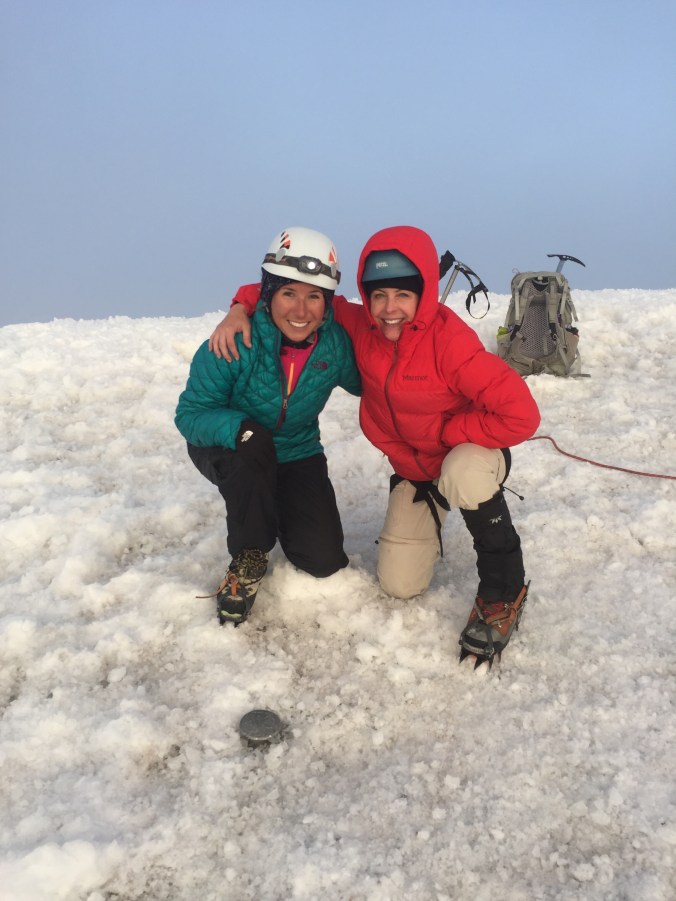
Amy and I at the summit plaque.

img_05131

img_05141

Navigating one of the many crevasse ladders on the route.

img_05231

img_05301

There were 7 or 8 ladders along the route. More crevasses are opening up wider this year due to scorching temperatures in the Northwest, causing the glaciers to melt out rapidly.

img_05341

img_05411

img_05451